
Estimated reading time: 12 minutes
Key Takeaways
- In 2026, branding revolves around identity with intention, focusing on authentic purpose and consumer connection.
- Establish a consistent visual identity and brand voice that resonates emotionally with your audience and reflects your values.
- Build a value-first content strategy and leverage community engagement to deepen relationships with your audience.
- Align your brand with social impact and tell compelling stories that highlight personal transformation and connection.
- Plan for sustainable growth with a flexible vision, using data to inform decisions while maintaining creativity and authenticity.
Table of contents
- Define Your Core Brand Identity (With Purpose)
- Establish a Consistent Visual Identity
- Craft Your Brand Voice and Messaging
- Build a Value-First Content Strategy
- Leverage Community-First Engagement
- Align Brand with Social Impact
- Invest in Personal Brand Storytelling
- Prioritize Privacy and Trust in Digital Experience
- Embrace Experiential and Interactive Branding
- Use Data to Inform Brand Decisions (Without Losing Soul)
- Expand Through Strategic Collaborations
- Elevate Customer Experience With Brand Touchpoint Mapping
- Cultivate Brand Loyalty With Rewards and Recognition
- Plan for Sustainable Growth (With a Flexible Vision)
- 2026 Brand Success: Summarized Checklist
From the rising power of purpose-driven brands to bold storytelling and community-first engagement, branding in 2026 is all about identity with intention. Your brand is no longer just a logo or color palette — it’s your voice, your values, and your experience delivered consistently in every interaction.
Define Your Core Brand Identity (With Purpose)
At the heart of every strong brand is clarity about who you are — your mission, your why, and what makes you different. In 2026, consumers (especially Gen Z and Zoomers) gravitate toward brands with authentic purpose and transparency.
Take Jess, a nutrition coach whose mission centers on “well-being without the guilt.” Instead of a generic tagline like eat healthy, Jess refocused her messaging to emphasize intuitive nutrition for busy women who want balance — not perfection. That shift made her brand resonate with a clear, emotionally compelling purpose.
Your brand identity should be less about features and more about feelings and transformation. When people understand why you do what you do, they connect emotionally — and emotional connections drive long-term loyalty.
Action Items – Core Brand Identity
☐ Write your brand’s mission statement in one sentence.
☐ Clarify your brand’s core values (3–5 words that define your ethos).
☐ Identify your brand’s differentiator — what you do that no one else does.
☐ Draft your brand’s “why” story (your personal journey or business spark).
Establish a Consistent Visual Identity
You’ve probably heard it before — consistency is key — but in 2026 that consistency must feel intentional, fresh, and value-aligned across platforms.
Visual identity = your logo, colors, typography, photography, and graphic style. It’s how people recognize you without reading a single word. And in a world crowded with content, cohesive visuals act like a beacon that draws the right audience.
Take Sarai’s Eco Boutique, a sustainable fashion brand. Even though they post on Instagram, TikTok, and Pinterest, every image has a calming earth-tone palette, clean typography, and natural textures. That makes their brand instantly recognizable — whether you see a reel or a pin.
Action Items – Visual Identity
☐ Finalize your brand color palette with primary and secondary colors.
☐ Choose 2–3 brand fonts and define when to use each.
☐ Create a photo and graphic style guide (filters, mood, composition direction).
☐ Design adaptable logo versions (full, icon, monochrome, and reverse).
Craft Your Brand Voice and Messaging
In 2026, audiences feel your brand voice before they think about it. Whether it’s witty, heartfelt, bold, or calming — your voice should be unmistakably you.
Think of Monique, a financial coach who realized her quirky text-message-style captions outperformed her long-form educational posts. So she leaned into that voice: playful, conversational, and packed with “aha” moments. That consistent tone not only grew her reach but also translated into stronger audience trust and higher course sales.
Your brand voice should reflect your personality and your audience’s preferences. Once you define that voice, use it everywhere — from captions and emails to webinars and client conversations.
Action Items – Brand Voice
☐ Choose 3 adjectives that describe your brand voice (e.g., bold, empathetic, clever).
☐ Write 5 sample captions in your brand voice.
☐ Create a messaging guide to help collaborators or team members.
☐ Review your website copy to ensure it reflects your voice consistently.
Build a Value-First Content Strategy
Content in 2026 isn’t about posting more — it’s about posting with intention. Every piece of content should answer:
What value does this give to my audience?
How does this deepen connection?
Take Catalina, a yoga instructor. Instead of only posting flow videos, she started a weekly “Mindful Monday” series that explores mindset, stress reduction, and short rituals with real impact. That series boosted engagement and turned passive followers into devoted community members.
Your content strategy should align with your audience’s interests, address their pain points, and position you as a trusted resource — not just a pretty feed.
Action Items – Content Strategy
☐ Define 3 content pillars (e.g., education, inspiration, behind-the-scenes).
☐ Create a weekly content calendar with planned topics.
☐ Incorporate at least one interactive content format (polls, Q&A, live sessions).
☐ Analyze and track your best-performing content monthly.
Leverage Community-First Engagement
Brands that flourish in 2026 don’t just broadcast — they build communities. A community converts to clients more naturally because they feel connected to you and each other.
For example, Priya, a digital marketing strategist, launched a closed group for women business owners where she provides weekly tips, feedback loops, and challenges. That group became a fertile space for client conversions and referrals — because people trusted her and felt a sense of belonging.
Focus on creating spaces where your audience can interact, give feedback, and share wins. This transforms users into fans and lifelong supporters.
Action Items – Community Engagement
☐ Choose a community platform (private Facebook group, Discord, Slack, Circle).
☐ Develop a weekly engagement routine (themes, prompts, feedback loops).
☐ Plan a quarterly challenge to drive participation.
☐ Monitor and celebrate member wins publicly (with permission).
Align Brand with Social Impact
In 2026, consumers expect brands to take positions on meaningful issues (that align with their values). This isn’t about politics — it’s about purpose and positive impact.
Look at Aisha’s Skin Care. She partnered with a nonprofit that supports women’s vocational training and pledged a percent of profits every quarter. She doesn’t just sell products — she champions empowerment. That alignment deepened her audience loyalty and boosted sales.
Social impact initiatives signal that your brand stands for more than revenue — and that resonates deeply with conscious consumers.
Action Items – Social Impact
☐ Identify a cause that aligns with your brand values.
☐ Set a measurable pledge (donation %, volunteer hours, product give-backs).
☐ Develop branded messaging around your impact initiative.
☐ Share impact stories regularly on your platforms.
Invest in Personal Brand Storytelling
People buy from people — not faceless entities. Your personal brand story is your secret weapon, and in 2026 it should be woven into everything you do.
Take Lauren, who runs a creative business course. Instead of generic testimonials, she shares transformation stories — before-and-after narratives that highlight real struggles and breakthroughs. Prospects see themselves in those stories and think, “That could be me.” That’s powerful persuasion without sleaze.
Your brand story should feel human, honest, and relatable — not polished perfection. That’s what creates connection and trust.
Action Items – Brand Storytelling
☐ Draft your brand story focusing on transformation (before, struggle, turning point, results).
☐ Collect 5 client transformation stories to share.
☐ Include visuals and quotes to humanize your storytelling.
☐ Repurpose one core story into different formats (email, carousel, video).
Prioritize Privacy and Trust in Digital Experience
In 2026, data privacy is a brand reputation issue. Consumers want to know their info is safe and that you respect boundaries.
Enter Nora’s Wellness Hub, which built trust by being transparent about data use — from analytics cookies to email preferences. She added easy opt-out options and clear privacy language. Her audience appreciated the honesty, which deepened trust and increased newsletter sign-ups.
A trustworthy digital experience isn’t just ethical — it’s a competitive edge.
Action Items – Privacy & Trust
☐ Review your privacy policy and simplify the language.
☐ Add clear consent options for email and cookies.
☐ Include testimonials and trust badges on high-traffic pages.
☐ Clean and segment your email list to respect user preferences.
Embrace Experiential and Interactive Branding
Static content still has its place, but interactive experiences are the currency of connection. Think brand activations that invite participation — whether digital or in person.
Marisol, a business coach, hosts monthly live “Brand Clinics.” Attendees get rapid feedback on their social posts in real time. That interactivity kept engagement high and created memorable experiences — leading many participants to become clients.
In 2026, interactive experiences help you stand out and deepen emotional resonance.
Action Items – Interactive Branding
☐ Brainstorm 3 interactive experiences (lives, quizzes, challenges).
☐ Schedule an interactive event each month.
☐ Create a landing page or sign-up sequence for your experience.
☐ Promote across platforms with a unified theme or hashtag.
Use Data to Inform Brand Decisions (Without Losing Soul)
Data helps you understand what’s working, but here’s the key — analysis should inform your intuition, not replace it. Balancing analytics with creativity is where magic happens.
Consider Tiffany, a creative entrepreneur. She used analytics to learn which content got the most saves and shares — but she leaned into her brand instincts to craft fresh variations. The result? More visibility and a brand that still felt true.
In 2026, smart branding leaders blend heart with data — using insights to refine rather than dictate.
Action Items – Data-Driven Branding
☐ Track key metrics monthly (engagement, conversion, retention).
☐ Set measurable goals for each quarter.
☐ Identify top-performing content and scale it.
☐ A/B test email subject lines and calls to action.
Expand Through Strategic Collaborations
Collaboration is the secret networking sauce of modern branding. Partnerships expand your reach, bring fresh creativity, and reinforce credibility.
Take Hannah, a yoga + wellness entrepreneur. She teamed up with a local holistic cafe to host wellness workshops. Each partner brought their audience — doubling potential visibility. Plus, the vibe was aligned and authentic.
Strategic collaborations let you grow with intention instead of chasing random exposure.
Action Items – Strategic Collaborations
☐ Identify 5 aligned brands or creators for partnerships.
☐ Pitch 3 collaboration ideas (workshops, bundle offers, content swaps).
☐ Set shared goals and KPIs for each collab.
☐ Document outcomes and iterate for future partnerships.
Elevate Customer Experience With Brand Touchpoint Mapping
Your brand lives in every touchpoint — from your website to customer service emails. If any touchpoint feels inconsistent, your brand perception can weaken.
Imagine Olivia’s Gift Shop, which mapped every interaction (from discovery to unboxing). They found small gaps — like inconsistent FAQs and mismatch between website tone and packaging messaging. Once fixed, customers remarked on how “seamless and uplifting” the experience felt — reinforcing brand love.
Touchpoint mapping ensures your brand feels whole, not fractured.
Action Items – Brand Touchpoint Mapping
☐ List all customer interaction points (ads, DMs, checkout, packaging, support).
☐ Identify inconsistencies in tone, visuals, or experience.
☐ Update assets to deliver unified messaging.
☐ Train your team on brand standards.
Cultivate Brand Loyalty With Rewards and Recognition
Repeat business is the backbone of sustainable growth, and loyalty programs help reinforce that bond.
Selena, a fitness coach, launched a punch-card style membership — the more sessions booked, the better perks clients received. It not only boosted retention but made clients feel seen and appreciated.
Loyalty experiences aren’t just transactional — they say, “We value you.”
Action Items – Loyalty & Recognition
☐ Design a simple loyalty program (points, perks, tiers).
☐ Communicate benefits clearly on your website and emails.
☐ Track member engagement monthly.
☐ Send surprise rewards to high-engagement members.
Plan for Sustainable Growth (With a Flexible Vision)
Finally, remember that strong branding is ever-evolving. The market shifts, new platforms appear, and your audience grows. In 2026, the most successful female entrepreneurs plan for sustainability — not overnight virality.
Take Erin, a business strategist. She built her brand with a 3-year vision but reviews quarterly. That keeps her aligned with long-term goals and agile enough to seize new opportunities.
Your brand should feel rooted — but not rigid.
Action Items – Sustainable Growth Planning
☐ Draft a 3-year brand vision.
☐ Set 12-month, 6-month, and 30-day goals.
☐ Conduct quarterly reviews and adjustments.
☐ Celebrate milestones (big or small) with your audience.
2026 Brand Success: Summarized Checklist
Here’s your quick reference checklist — print it, pin it, or turn it into stickers if that’s your vibe:
☐ Defined core brand identity and purpose.
☐ Consistent visual identity across platforms.
☐ Distinct brand voice documented and used.
☐ Value-first content strategy in place.
☐ Community engagement plan.
☐ Social impact initiative aligned with values.
☐ Compelling brand storytelling.
☐ Privacy and trust standards audited.
☐ Interactive brand experiences scheduled.
☐ Key data tracked and used thoughtfully.
☐ Strategic collaborations mapped.
☐ Customer touchpoint mapping complete.
☐ Loyalty program launched.
☐ Sustainable growth plan created.
Final Thought
Branding in 2026 isn’t about perfection — it’s about purpose, presence, and people. Your brand is the living expression of your values and voice. When you align your visuals, messaging, experiences, and impact around a clear identity, you’ll attract your ideal audience with authenticity and heart.
You’ve got this — and the world is ready for your brand magic.
Working With Eme Marketing & Design for Your 2026 Marketing Journey
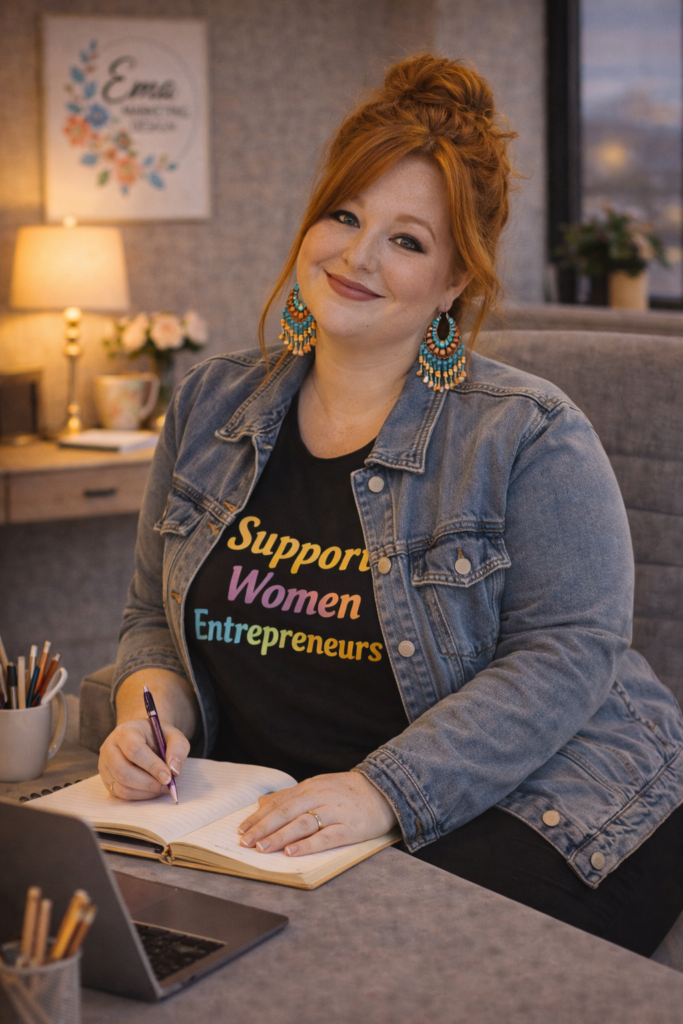
Marketing in 2026 is not about chasing trends, posting louder, or doing more just to stay visible. It’s about clarity, alignment, and building a brand that actually works for your business goals. That’s where Eme Marketing & Design comes in — not as a one-size-fits-all agency, but as a strategic partner who understands what female entrepreneurs really need to grow sustainably.
At Eme Marketing & Design, the focus is on strategy first, execution second. Every marketing decision starts with your brand foundation: your voice, your values, your audience, and your long-term vision. Whether you are refining an established brand or building something new, your marketing is designed to feel cohesive, confident, and unmistakably you. No fluff, no gimmicks, and absolutely no pressure to be everywhere at once.
What sets Eme Marketing & Design apart is the balance of creativity and data-driven decision-making. Branding, content, social media, email marketing, analytics, and visibility strategies are all built to work together — not in silos. The result is marketing that feels intentional, measurable, and aligned with how real people make buying decisions in 2026.
What Your 2026 Marketing Support Can Look Like
Working with Eme Marketing & Design means you are never guessing what to do next. Support is tailored to your goals and can include:
- Brand clarity and positioning for 2026 and beyond
- Strategic content planning that supports visibility and conversions
- Social media strategies that prioritize engagement over vanity metrics
- Email marketing that builds trust, not inbox fatigue
- Analytics guidance so you know what’s working and why
- Launch support for programs, services, and digital products
Instead of trying to keep up with every platform or trend, you gain a clear roadmap that makes your marketing feel manageable and effective.
The Bigger Picture
Female entrepreneurs in 2026 are building businesses that support their lives, not consume them. Marketing should feel like a tool that creates momentum — not another source of overwhelm. With Eme Marketing & Design, the goal is simple: help you show up confidently, attract the right audience, and build a brand that grows with you.
If you’re ready for marketing that feels aligned, strategic, and human — your 2026 journey doesn’t have to be a solo one.

Additional Resources
- How to Use Hashtags Effectively on Every Social Media Platform in 2026
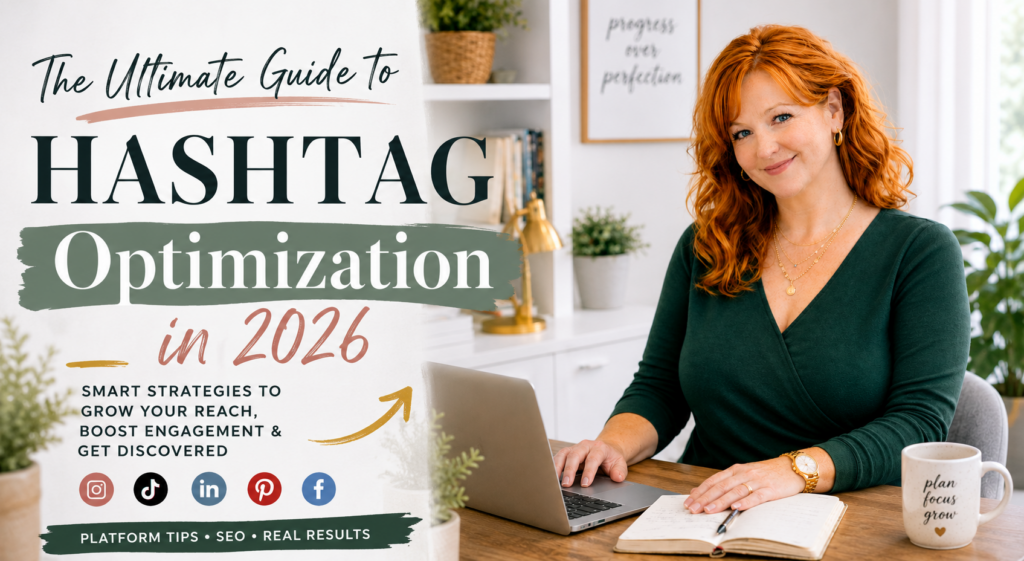
 Hashtags are no longer about stuffing captions with trending phrases and hoping for viral reach. In 2026, hashtags work best when they support searchability, audience targeting, and content relevance across platforms like Instagram, Threads, TikTok, LinkedIn, Pinterest, and Facebook. Each platform now uses hashtags differently, which means businesses need smarter, more intentional strategies. This blog breaks down how hashtags actually function today, what mistakes to avoid, and how to optimize your hashtag strategy for discoverability, engagement, SEO, and long-term growth. If your current hashtag strategy still feels stuck in 2020, this guide will help you modernize your approach and get better results.
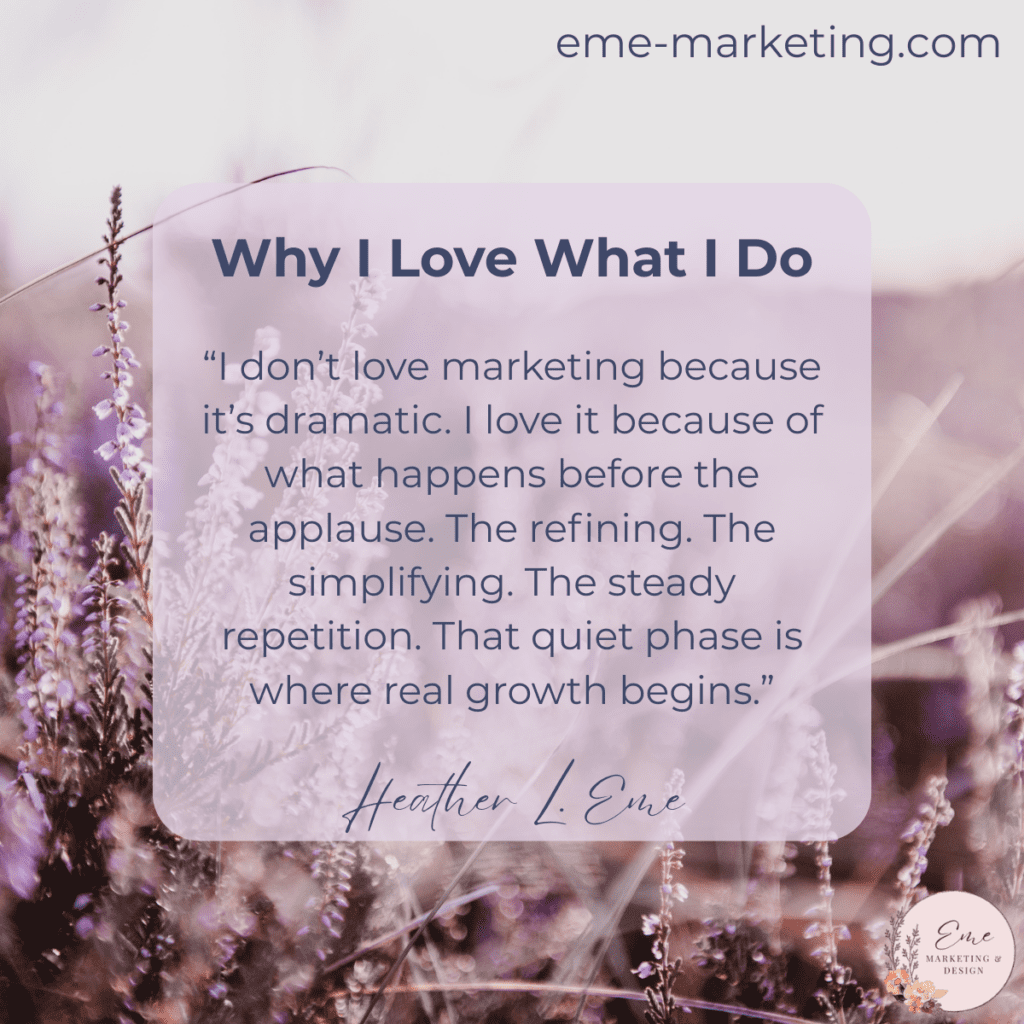
 - The Quiet Work No One SeesGrowth rarely begins with applause. It begins quietly. Before the visible results, there is alignment. Before the momentum, there is refinement. Much of meaningful business development happens behind the scenes through clarified messaging, simplified strategy, and steady repetition. Although those stages are not flashy, they are foundational. Sustainable growth is built in quieter seasons long before numbers rise publicly. Helping entrepreneurs stay grounded during that phase — when doubt is loud and progress feels invisible — is one of the most meaningful parts of my work. Because durable success is rarely dramatic at first. It is disciplined, aligned, and steady.
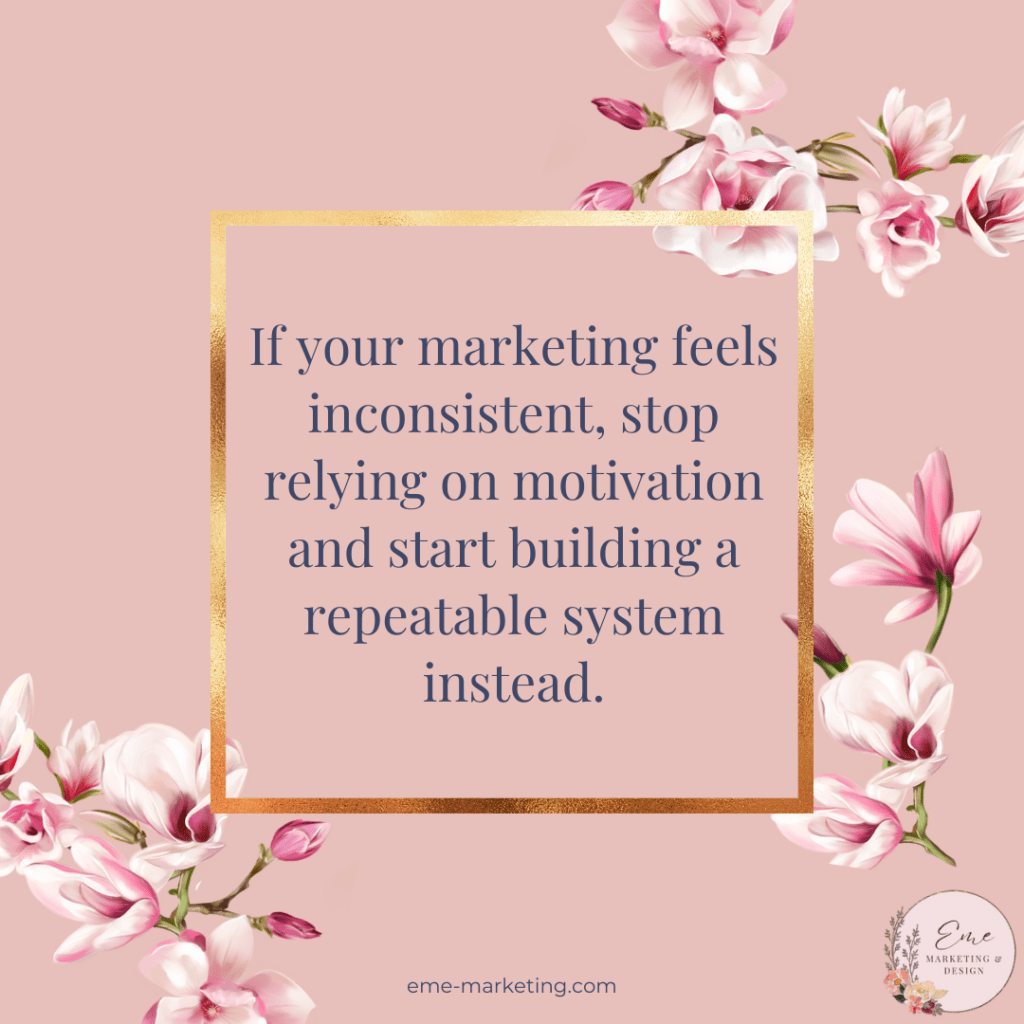
- Why Your Marketing Feels Inconsistent (and How to Fix It Without Burning Out)If your marketing feels inconsistent, scattered or dependent on your energy level each week, you are not alone. Many creative female entrepreneurs are not struggling because they lack ideas. They are struggling because they lack a repeatable system to support their visibility. In this daily marketing tip, learn why inconsistent marketing happens, how it affects trust and momentum, what to do to fix it and what to avoid if you want to stay visible without burning out. If your content rhythm feels chaotic lately, this blog will help you build a strategy that feels more organized, sustainable and supportive.
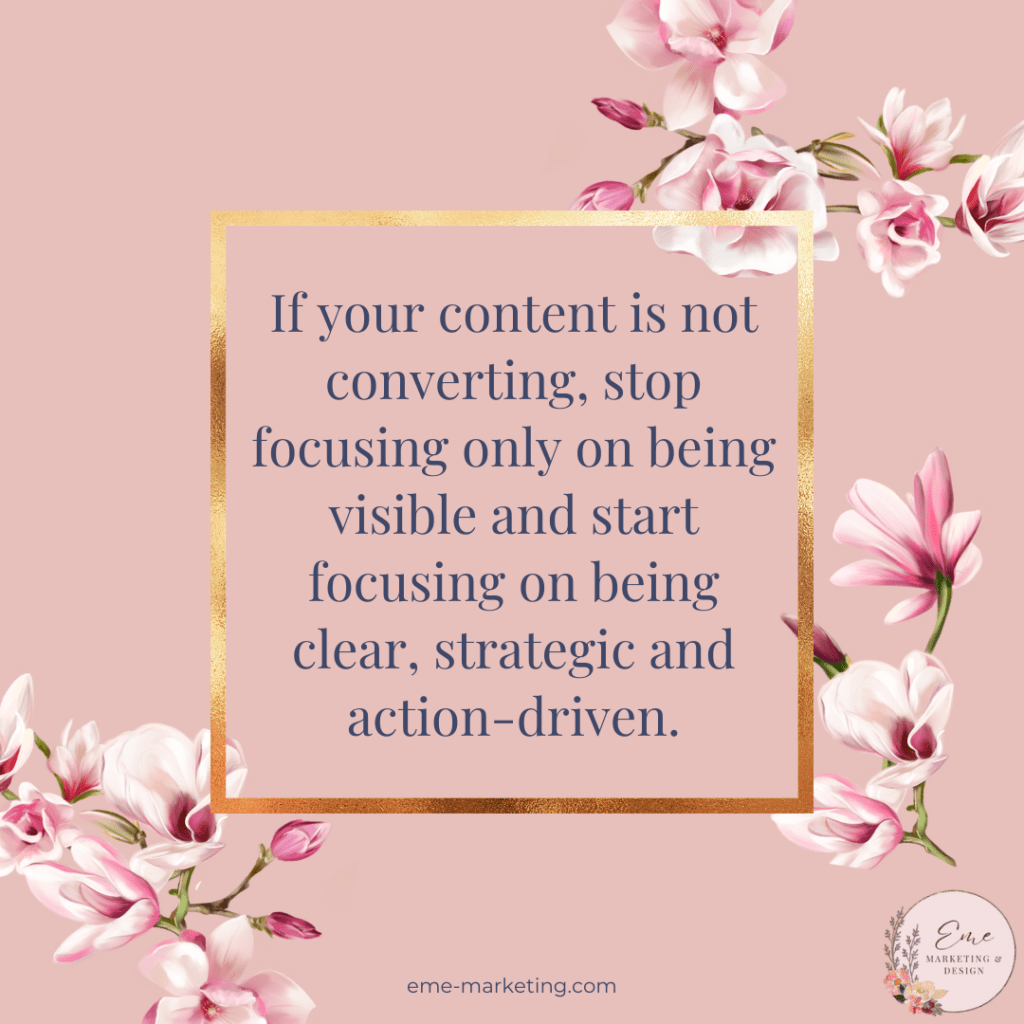
- Why Your Content Isn’t Converting (and What to Fix First)If your content looks good but isn’t bringing in inquiries, leads or real business growth, there’s a disconnect somewhere in your strategy. This daily marketing tip breaks down why your content may not be converting and what to fix first. Designed for creative female entrepreneurs, you’ll learn how to move from simply posting to creating content with purpose, clarity and direction. From identifying common mistakes to implementing practical changes, this guide helps you turn visibility into actual results. If your marketing feels inconsistent or unclear, this is your starting point to create content that finally works for your business.
- How to Build Consistency That Stands The Test of TimeMotivation is unreliable. Some weeks, ideas flow easily and showing up feels natural. Other weeks, energy dips and everything feels heavier. If your marketing strategy depends on constant inspiration, it will always feel fragile. Sustainable consistency isn’t built on emotion. It’s built on structure. When you know what you talk about, who you serve and where you’re showing up, momentum becomes manageable instead of overwhelming. You don’t need more pressure. You need a system that works on your normal days. Because businesses don’t grow from adrenaline. They grow from steady, intentional visibility.
- How to Use Mailchimp in 2026 to Build an Email Marketing System That Grows Your BusinessEmail marketing isn’t outdated in 2026. It’s one of the few tools you actually own. Mailchimp helps you turn scattered marketing into a system that works consistently behind the scenes. From simple sign-up forms to automated welcome sequences and smart segmentation, it allows you to build real connections without feeling overwhelmed. This blog walks through how to use Mailchimp in a practical, sustainable way, using Erin Emerson as a real-world example. If your marketing feels inconsistent or exhausting, this approach helps you create something steady, intentional, and built for long-term growth instead of short-term visibility.
- Your Audience Doesn’t Owe You EngagementEngagement on social media is not something your audience owes you. It is something that grows through relevance, familiarity and trust. When posts underperform, it can feel personal, especially for small business owners who invest time and vulnerability into their content. Shifting from expectation to intention changes the experience. Instead of focusing on what should perform, focus on what serves. People engage when they feel understood and when your message aligns with what they are already navigating. Connection strengthens when it is invited rather than demanded. Sustainable marketing depends less on urgency and more on understanding your audience consistently.
- The Kind of Marketing That Feels AuthenticI don’t love marketing because of platforms, reach or analytics dashboards. I love it because of the conversations. The quiet strategy calls. The “can I run this by you?” messages. The trust that builds slowly over time. One of the greatest lessons I’ve learned is that online relationships are not less meaningful than in-person ones. They’re simply happening in a different room. When marketing is rooted in guidance, presence and real conversation, it becomes more than strategy. It becomes relationship. And relationships — not trends — are what truly grow sustainable businesses.