
Estimated reading time: 5 minutes
Key Takeaways
- Having a strong online presence is crucial for small businesses, and choosing the right website platform plays a vital role.
- Understand your business needs by defining the purpose of your site, knowing your target audience, and listing required features.
- Key considerations when choosing a platform include ease of use, customization options, scalability, mobile responsiveness, SEO features, security, and cost.
- Popular platforms like WordPress, Wix, Shopify, Squarespace, and BigCommerce cater to various needs of small businesses.
- Select a website platform that aligns with your goals to enhance your online presence and drive business success.
Table of contents
Having an online presence is vital for the success of any small business. A website serves as the digital storefront, representing your brand, products, and services to potential customers worldwide. However, with numerous website platforms available, choosing the right one for your small business can take time and effort. In this guide, we’ll explore the key factors to consider when selecting a website platform that aligns with your business goals, budget, and technical requirements.
Understanding Your Business Needs
Before diving into the sea of website platforms, it’s crucial to understand your business needs and objectives. Ask yourself:
What is the purpose of my website? Defining your website’s purpose will guide your platform selection, whether to showcase products, generate leads, provide information or sell online.
Who is my target audience? Understanding your target audience’s demographics, preferences, and behavior will help you tailor your website’s design and functionality to effectively meet their needs.
What features do I need? Make a list of essential features such as e-commerce functionality, blogging capabilities, appointment scheduling, etc., that your website requires to accomplish its goals.
Key Factors to Consider When Choosing A Website Platform
Ease of Use: As a small business owner, you want a website platform that is user-friendly and doesn’t require extensive technical expertise to manage. Look for platforms with intuitive drag-and-drop editors and straightforward interfaces.
Customization Options: Your website should reflect your brand identity. Choose a platform that offers ample customization options, including customizable templates, fonts, colors, and the ability to add your logo and branding elements.
Scalability: While your business may be small now, choosing a platform that can grow with your company is essential. Ensure the platform can accommodate increased traffic, additional features, and future expansions without significant disruptions.
Mobile Responsiveness: With most internet users accessing websites from mobile devices, having a mobile-responsive website is non-negotiable. Choose a platform that automatically optimizes your site for various screen sizes and devices.
SEO Features: A website’s visibility on search engines is crucial for attracting organic traffic. Look for platforms offering built-in SEO tools, such as customizable meta tags, clean URL structures, XML sitemaps and responsive design, to improve your site’s rankings.
Security: Protecting your website and customer data from cyber threats is paramount. Ensure the platform follows industry-standard security protocols, such as SSL encryption, regular security updates, and PCI compliance for e-commerce functionality.
Cost: As a small business owner, you need to consider the cost implications of your website platform. While some platforms offer free plans or low monthly fees, others may require upfront investment or additional fees for advanced features. Evaluate your budget constraints and choose a platform that provides the best value for your money.
Popular Website Platforms for Small Businesses
WordPress: Powering over 40% of the internet, WordPress is a highly versatile and customizable platform suitable for small businesses of all types. With thousands of themes and plugins available, you can easily create a tailored website. However, WordPress may require more technical know-how compared to other platforms.
Wix: Known for its beginner-friendly interface and drag-and-drop editor, Wix allows you to create stunning websites without any coding skills. It offers a variety of templates, built-in SEO tools, and e-commerce functionality, making it suitable for small businesses looking to establish an online presence quickly.
Shopify: If you’re primarily focused on selling products online, Shopify is an excellent choice. It’s a dedicated e-commerce platform offering everything you need to set up and manage an online store, including payment processing, inventory management, and marketing tools.
Squarespace: Squarespace is renowned for its visually appealing templates and seamless design experience. It’s ideal for small businesses in creative industries or those looking to showcase their portfolio or services in a visually engaging manner.
BigCommerce: Similar to Shopify, BigCommerce is a robust e-commerce platform that caters to businesses of all sizes. It offers advanced features such as multi-channel selling, abandoned cart recovery, and flexible shipping options, making it a preferred choice for growing online retailers.
Working with Heather Eme & Eme Marketing & Design

Sometimes what a business needs most is not more hustle. It needs clarity.
When you work with Heather Eme and Eme Marketing & Design, you get an experienced partner who can help you simplify the noise, focus on what matters and create a plan that fits your goals. Together, we turn good ideas into real strategy and real strategy into action.
From content creation to visibility, branding to organization, Heather helps business owners build momentum without losing themselves in the process.
Bring the ideas, the questions and even the half-finished notes. We’ll figure it out together.
Need expert guidance on your website?
We have two decades of website experience to help you maximize your marketing efforts and effectively reach your goals.
Additional Resources
- How to Use Hashtags Effectively on Every Social Media Platform in 2026
 Hashtags are no longer about stuffing captions with trending phrases and hoping for viral reach. In 2026, hashtags work best when they support searchability, audience targeting, and content relevance across platforms like Instagram, Threads, TikTok, LinkedIn, Pinterest, and Facebook. Each platform now uses hashtags differently, which means businesses need smarter, more intentional strategies. This blog breaks down how hashtags actually function today, what mistakes to avoid, and how to optimize your hashtag strategy for discoverability, engagement, SEO, and long-term growth. If your current hashtag strategy still feels stuck in 2020, this guide will help you modernize your approach and get better results.
 - The Quiet Work No One SeesGrowth rarely begins with applause. It begins quietly. Before the visible results, there is alignment. Before the momentum, there is refinement. Much of meaningful business development happens behind the scenes through clarified messaging, simplified strategy, and steady repetition. Although those stages are not flashy, they are foundational. Sustainable growth is built in quieter seasons long before numbers rise publicly. Helping entrepreneurs stay grounded during that phase — when doubt is loud and progress feels invisible — is one of the most meaningful parts of my work. Because durable success is rarely dramatic at first. It is disciplined, aligned, and steady.
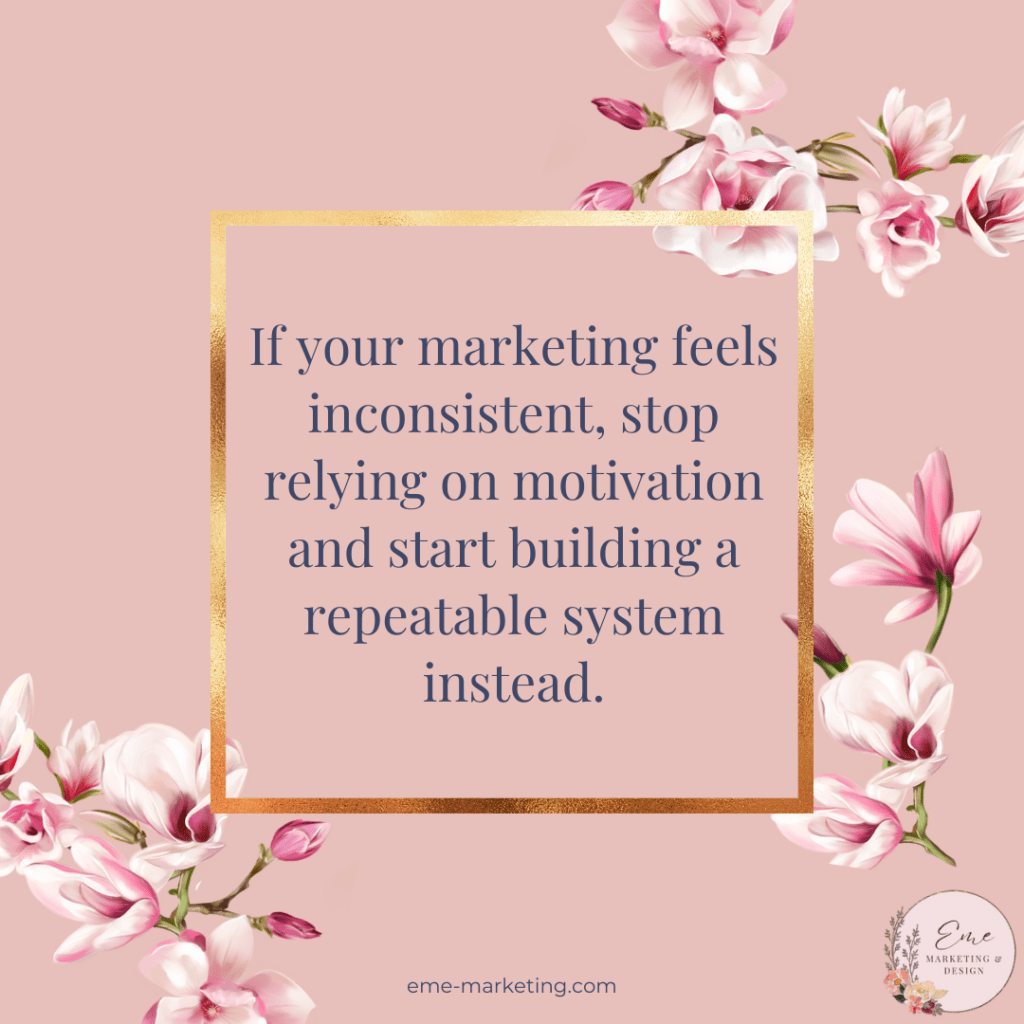
- Why Your Marketing Feels Inconsistent (and How to Fix It Without Burning Out)If your marketing feels inconsistent, scattered or dependent on your energy level each week, you are not alone. Many creative female entrepreneurs are not struggling because they lack ideas. They are struggling because they lack a repeatable system to support their visibility. In this daily marketing tip, learn why inconsistent marketing happens, how it affects trust and momentum, what to do to fix it and what to avoid if you want to stay visible without burning out. If your content rhythm feels chaotic lately, this blog will help you build a strategy that feels more organized, sustainable and supportive.
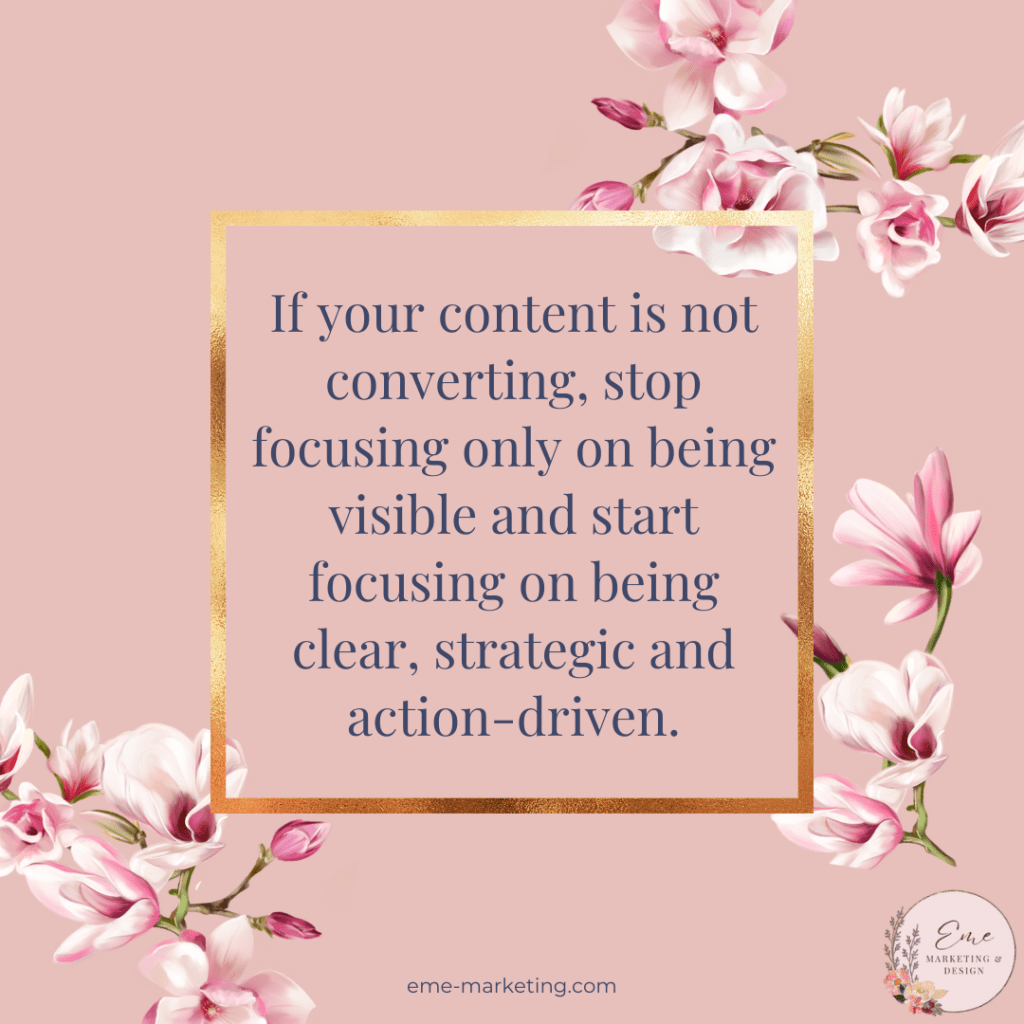
- Why Your Content Isn’t Converting (and What to Fix First)If your content looks good but isn’t bringing in inquiries, leads or real business growth, there’s a disconnect somewhere in your strategy. This daily marketing tip breaks down why your content may not be converting and what to fix first. Designed for creative female entrepreneurs, you’ll learn how to move from simply posting to creating content with purpose, clarity and direction. From identifying common mistakes to implementing practical changes, this guide helps you turn visibility into actual results. If your marketing feels inconsistent or unclear, this is your starting point to create content that finally works for your business.
- How to Build Consistency That Stands The Test of TimeMotivation is unreliable. Some weeks, ideas flow easily and showing up feels natural. Other weeks, energy dips and everything feels heavier. If your marketing strategy depends on constant inspiration, it will always feel fragile. Sustainable consistency isn’t built on emotion. It’s built on structure. When you know what you talk about, who you serve and where you’re showing up, momentum becomes manageable instead of overwhelming. You don’t need more pressure. You need a system that works on your normal days. Because businesses don’t grow from adrenaline. They grow from steady, intentional visibility.
- How to Use Mailchimp in 2026 to Build an Email Marketing System That Grows Your BusinessEmail marketing isn’t outdated in 2026. It’s one of the few tools you actually own. Mailchimp helps you turn scattered marketing into a system that works consistently behind the scenes. From simple sign-up forms to automated welcome sequences and smart segmentation, it allows you to build real connections without feeling overwhelmed. This blog walks through how to use Mailchimp in a practical, sustainable way, using Erin Emerson as a real-world example. If your marketing feels inconsistent or exhausting, this approach helps you create something steady, intentional, and built for long-term growth instead of short-term visibility.
- Your Audience Doesn’t Owe You EngagementEngagement on social media is not something your audience owes you. It is something that grows through relevance, familiarity and trust. When posts underperform, it can feel personal, especially for small business owners who invest time and vulnerability into their content. Shifting from expectation to intention changes the experience. Instead of focusing on what should perform, focus on what serves. People engage when they feel understood and when your message aligns with what they are already navigating. Connection strengthens when it is invited rather than demanded. Sustainable marketing depends less on urgency and more on understanding your audience consistently.
- The Kind of Marketing That Feels AuthenticI don’t love marketing because of platforms, reach or analytics dashboards. I love it because of the conversations. The quiet strategy calls. The “can I run this by you?” messages. The trust that builds slowly over time. One of the greatest lessons I’ve learned is that online relationships are not less meaningful than in-person ones. They’re simply happening in a different room. When marketing is rooted in guidance, presence and real conversation, it becomes more than strategy. It becomes relationship. And relationships — not trends — are what truly grow sustainable businesses.