
Estimated reading time: 7 minutes
Key Takeaways
- Entrepreneurs often focus too much on posts, neglecting the importance of the comment section for engagement and relationship-building.
- Comments serve as strong engagement signals that boost visibility in social media algorithms when replies foster ongoing interactions.
- The comment section also provides valuable market research, revealing audience insights and potential content topics.
- Commenting on others’ posts enhances visibility and establishes expertise, important for building connections organically.
- To encourage comments, end posts with questions and engage thoughtfully with commenters to foster a sense of community.
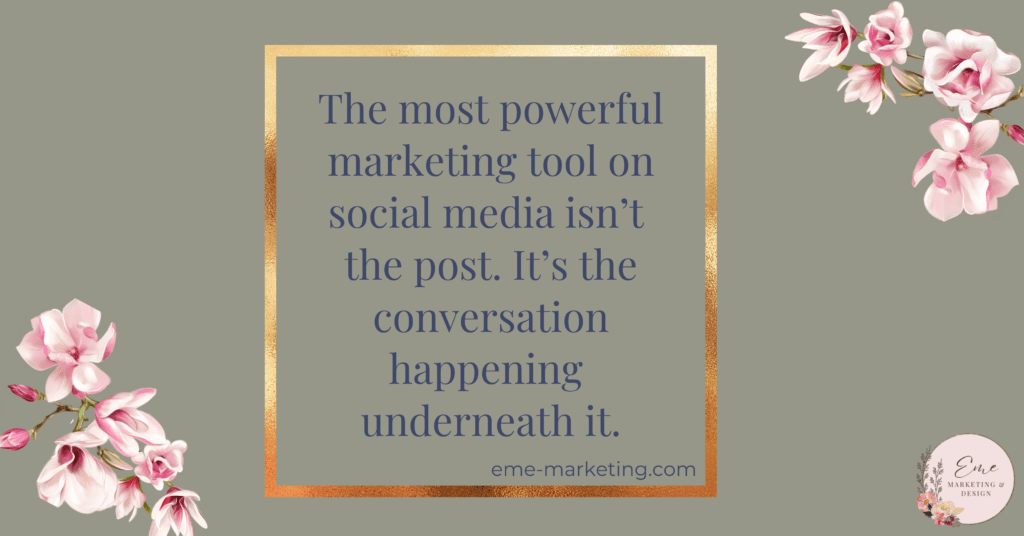
Table of contents
- Engagement Signals That Algorithms Love
- Commenting Builds Relationships Faster Than Posting
- Comment Sections Are Market Research in Disguise
- The Strategy Most Businesses Ignore
- How to Encourage More Comments on Your Posts
- Why Comment Culture Builds Stronger Brands
- A Simple Daily Habit That Changes Everything
- Working with Eme Marketing & Design
- Check Out These Additional Resources
Most entrepreneurs spend the majority of their time worrying about what to post on social media.
They brainstorm content ideas. They design graphics. They schedule posts.
And then… they wait.
They hope the algorithm places their content in front of the right people, that engagement follows and that someone takes the step to comment, share or start a conversation.
But the truth is that one of the most powerful marketing tools on social media isn’t the post itself.
It’s the comment section.
If you are treating your comment section like an afterthought, you are leaving an enormous opportunity for connection, visibility and growth sitting right in front of you.
Let’s talk about why comment sections matter so much and how entrepreneurs can start using them strategically.
Engagement Signals That Algorithms Love
Social media algorithms are constantly trying to determine which content deserves more visibility. Platforms like Facebook, Instagram, LinkedIn and Threads rely heavily on engagement signals to determine what gets pushed into more feeds.
Comments are one of the strongest engagement signals available.
A like is nice but it’s passive. A comment tells the platform that someone took the time to interact with the content in a more meaningful way.
When your posts receive comments, several things happen behind the scenes.
The algorithm recognizes the increased activity, keeps the post circulating in feeds longer and ultimately exposes it to a wider audience.
But there is a second layer to this that many entrepreneurs overlook.
When you respond to comments, the conversation grows. The algorithm sees an ongoing interaction rather than a one-time response.
Every reply you leave becomes another signal that your content is worth showing to more people.
That means the comment section isn’t just feedback.
It’s fuel.
Commenting Builds Relationships Faster Than Posting
Posting content introduces people to your brand.
Conversation builds the relationship.
One of the biggest misconceptions I see among entrepreneurs is the idea that marketing success comes from posting more content. While consistency matters, connection matters more.
When someone leaves a comment on your post, they are opening the door for interaction.
Responding thoughtfully does several things at once.
It acknowledges the person behind the comment, signals that your business is genuinely paying attention and turns a one-sided post into an actual conversation instead of a broadcast.
This is where real community begins.
Think about your own behavior on social media. If you comment on a post and the creator responds warmly, you’re far more likely to engage again later.
Over time those small interactions add up.
Followers become familiar names.
Conversations become ongoing relationships.
Relationships eventually become clients, referrals and advocates for your brand.
Comment Sections Are Market Research in Disguise
Another overlooked advantage of comments is the insight they provide into your audience.
When people respond to your posts, they often reveal exactly what they are thinking about, struggling with or curious about.
These responses can become an incredible source of marketing intelligence.
For example, you might notice people asking similar questions under multiple posts. That’s a signal that the topic deserves its own piece of content.
You may see people sharing their experiences or frustrations. That can help you understand the challenges your audience faces in real life.
You might even notice phrases and language that your audience naturally uses. That language can improve your website copy, blog content and marketing messages.
In other words, the comment section is a real-time focus group.
And it costs nothing.
The Strategy Most Businesses Ignore
Many entrepreneurs make the mistake of thinking engagement only happens on their own posts.
In reality, some of the most powerful visibility strategies involve commenting on other people’s content.
When you thoughtfully comment on posts within your industry or community, several things happen.
Your name becomes visible to new audiences, your expertise starts to surface organically and you establish yourself as someone who joins meaningful conversations rather than simply promoting a service or product.
This works especially well on platforms like LinkedIn and Threads where thoughtful discussion is encouraged.
A single well-written comment on a popular post can introduce your profile to hundreds or sometimes thousands of people.
This approach builds visibility organically while still feeling authentic and relationship-driven.
How to Encourage More Comments on Your Posts
If you want more conversation under your content, the easiest way to start is by making your posts easier to respond to.
Instead of ending a post with a statement, consider ending with a simple question.
Ask your audience about their experiences. Invite them to share their thoughts. Encourage discussion rather than passive reading.
For example, instead of saying:
“Consistency is the key to social media success.”
You might say:
“What part of staying consistent on social media feels hardest for you right now?”
Questions give people an easy entry point into the conversation.
Another effective strategy is acknowledging commenters individually. When someone shares a thought or perspective, respond with curiosity and appreciation.
People who feel heard are far more likely to participate again in the future.
Why Comment Culture Builds Stronger Brands
Brands that build strong communities online rarely achieve that through content alone.
They do it through consistent conversation.
When people visit your social media profiles and see active comment sections, something important happens psychologically.
They see proof that your brand is alive.
They see interaction, discussion and connection. That creates trust.
A quiet comment section often gives the opposite impression. Even if your content is excellent, the absence of conversation can make a page feel less dynamic.
The goal is not just to publish content.
The goal is to create an environment where conversation feels natural.
When you treat comments as part of your marketing strategy rather than an afterthought, your social media presence becomes more than a collection of posts.
It becomes a place where people interact.
A Simple Daily Habit That Changes Everything
If you want a practical place to start, try this simple routine.
Spend ten minutes a day doing three things.
Reply to comments on your recent posts.
Leave thoughtful comments on a few posts within your network.
Respond to anyone who has interacted with your content recently.
It’s a small habit but it compounds over time.
Social media was designed to be social.
Entrepreneurs who remember that and lean into conversation rather than broadcasting often see stronger engagement, deeper relationships and more meaningful growth.
And sometimes the most valuable marketing you can do isn’t another post.
It’s simply joining the conversation already happening underneath one.
Working with Eme Marketing & Design
For many entrepreneurs, the challenge isn’t understanding that engagement matters.

The challenge is finding the time and strategy to do it consistently.
Between running a business, serving clients and managing daily responsibilities, social media engagement often becomes something that gets pushed to the bottom of the to-do list.
That’s where Eme Marketing & Design comes in.
At Eme Marketing, the focus is not just on posting content. It’s about building genuine relationships that support long-term business growth. Strategic engagement, thoughtful conversation and consistent visibility are all part of a marketing system designed to help entrepreneurs connect with the right audience.
Through social media strategy, content development and engagement guidance, Eme Marketing helps business owners turn their social media presence into a space where conversation and connection thrive.
Because the goal isn’t simply to post more.
The goal is to build a brand that people recognize, trust and enjoy interacting with.
If your social media presence feels quiet, inconsistent or disconnected from your larger marketing goals, it may be time to rethink the strategy behind it.
Eme Marketing & Design works with entrepreneurs who are ready to bring structure, clarity and genuine connection back into their online marketing.
Because when social media is used intentionally, it becomes far more than a marketing tool.
It becomes a relationship builder for your business.
Check Out These Additional Resources
- How to Use Hashtags Effectively on Every Social Media Platform in 2026
 Hashtags are no longer about stuffing captions with trending phrases and hoping for viral reach. In 2026, hashtags work best when they support searchability, audience targeting, and content relevance across platforms like Instagram, Threads, TikTok, LinkedIn, Pinterest, and Facebook. Each platform now uses hashtags differently, which means businesses need smarter, more intentional strategies. This blog breaks down how hashtags actually function today, what mistakes to avoid, and how to optimize your hashtag strategy for discoverability, engagement, SEO, and long-term growth. If your current hashtag strategy still feels stuck in 2020, this guide will help you modernize your approach and get better results.
 - The Quiet Work No One SeesGrowth rarely begins with applause. It begins quietly. Before the visible results, there is alignment. Before the momentum, there is refinement. Much of meaningful business development happens behind the scenes through clarified messaging, simplified strategy, and steady repetition. Although those stages are not flashy, they are foundational. Sustainable growth is built in quieter seasons long before numbers rise publicly. Helping entrepreneurs stay grounded during that phase — when doubt is loud and progress feels invisible — is one of the most meaningful parts of my work. Because durable success is rarely dramatic at first. It is disciplined, aligned, and steady.
- Why Your Marketing Feels Inconsistent (and How to Fix It Without Burning Out)If your marketing feels inconsistent, scattered or dependent on your energy level each week, you are not alone. Many creative female entrepreneurs are not struggling because they lack ideas. They are struggling because they lack a repeatable system to support their visibility. In this daily marketing tip, learn why inconsistent marketing happens, how it affects trust and momentum, what to do to fix it and what to avoid if you want to stay visible without burning out. If your content rhythm feels chaotic lately, this blog will help you build a strategy that feels more organized, sustainable and supportive.
- Why Your Content Isn’t Converting (and What to Fix First)If your content looks good but isn’t bringing in inquiries, leads or real business growth, there’s a disconnect somewhere in your strategy. This daily marketing tip breaks down why your content may not be converting and what to fix first. Designed for creative female entrepreneurs, you’ll learn how to move from simply posting to creating content with purpose, clarity and direction. From identifying common mistakes to implementing practical changes, this guide helps you turn visibility into actual results. If your marketing feels inconsistent or unclear, this is your starting point to create content that finally works for your business.
- How to Build Consistency That Stands The Test of TimeMotivation is unreliable. Some weeks, ideas flow easily and showing up feels natural. Other weeks, energy dips and everything feels heavier. If your marketing strategy depends on constant inspiration, it will always feel fragile. Sustainable consistency isn’t built on emotion. It’s built on structure. When you know what you talk about, who you serve and where you’re showing up, momentum becomes manageable instead of overwhelming. You don’t need more pressure. You need a system that works on your normal days. Because businesses don’t grow from adrenaline. They grow from steady, intentional visibility.
- How to Use Mailchimp in 2026 to Build an Email Marketing System That Grows Your BusinessEmail marketing isn’t outdated in 2026. It’s one of the few tools you actually own. Mailchimp helps you turn scattered marketing into a system that works consistently behind the scenes. From simple sign-up forms to automated welcome sequences and smart segmentation, it allows you to build real connections without feeling overwhelmed. This blog walks through how to use Mailchimp in a practical, sustainable way, using Erin Emerson as a real-world example. If your marketing feels inconsistent or exhausting, this approach helps you create something steady, intentional, and built for long-term growth instead of short-term visibility.
- Your Audience Doesn’t Owe You EngagementEngagement on social media is not something your audience owes you. It is something that grows through relevance, familiarity and trust. When posts underperform, it can feel personal, especially for small business owners who invest time and vulnerability into their content. Shifting from expectation to intention changes the experience. Instead of focusing on what should perform, focus on what serves. People engage when they feel understood and when your message aligns with what they are already navigating. Connection strengthens when it is invited rather than demanded. Sustainable marketing depends less on urgency and more on understanding your audience consistently.
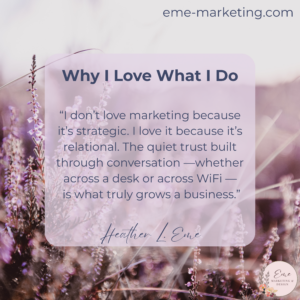
- The Kind of Marketing That Feels AuthenticI don’t love marketing because of platforms, reach or analytics dashboards. I love it because of the conversations. The quiet strategy calls. The “can I run this by you?” messages. The trust that builds slowly over time. One of the greatest lessons I’ve learned is that online relationships are not less meaningful than in-person ones. They’re simply happening in a different room. When marketing is rooted in guidance, presence and real conversation, it becomes more than strategy. It becomes relationship. And relationships — not trends — are what truly grow sustainable businesses.
- Why Repurposing Content Is One of the Smartest Social Media StrategiesCreating new social media content every day can feel overwhelming for many entrepreneurs, but effective marketing does not always require starting from scratch. Repurposing content allows businesses to take one idea and adapt it into multiple formats across platforms like Instagram, Facebook, LinkedIn and Pinterest. A blog post can become several graphics, a carousel post, a discussion question or a short video clip. By reshaping existing content for different audiences and formats, entrepreneurs can extend the life of their ideas, maintain consistent visibility and reduce the pressure of constantly creating something new.
- Successful Businesses Treat Online Comments Like GoldMost entrepreneurs focus heavily on creating social media posts but overlook one of the most powerful marketing tools available: the comment section. Every comment signals engagement to the algorithm, extends the life of your content and opens the door for real conversation with your audience. When business owners actively participate in those conversations, they build trust, visibility and stronger relationships over time. Instead of treating comments as an afterthought, smart marketers use them strategically to grow their reach and connect with potential clients. Sometimes the most effective social media strategy isn’t posting more content at all. It’s simply showing up and participating in the conversations already happening.
- Relationships Are the Real WorkI didn’t fall in love with marketing because of platforms or analytics. I fell in love with the conversations. The voice notes. The “can I run this by you?” messages. The quiet trust built over time. One of the biggest lessons I’ve learned is that online relationships are not less meaningful than in-person ones. They’re simply happening in a different room. When marketing is rooted in guidance, listening, and genuine care, it becomes something deeper than strategy. It becomes relationship. And relationships — whether across a desk or across WiFi — are what truly build sustainable, meaningful businesses.
- Marketing Is Not a MoodMarketing is not a mood, and building your online visibility around inspiration alone will always create inconsistency. In this first installment of The Organized Creative, Heather Eme shares the exact marketing system she is currently running in her business, including weekly content focus, defined platform roles, intentional engagement and CEO review practices. Designed for brilliant but overwhelmed female entrepreneurs, this piece explores how structure reduces decision fatigue, creates sustainable visibility and turns scattered effort into strategic growth. If your marketing feels chaotic or reactive, the issue isn’t effort. It’s infrastructure — and infrastructure can be built.
- How To Grow Your Blog When Beginner Blog Marketing Stops WorkingBeginner blog marketing often focuses on publishing content and sharing it on social media, but sustainable growth requires a more strategic approach. In this article, Heather Eme explores the shift from beginner to intermediate blog marketing and explains how entrepreneurs can turn their blogs into powerful marketing engines. Through the story of Erin Emerson, a creative writer learning to structure her marketing, readers discover how search intent, content repurposing, email marketing, analytics and user experience all work together to grow visibility. If your blog feels like it isn’t producing the results you hoped for, this guide explains how structure and systems can transform your content into a long-term marketing asset.
- Why Your Blog Is Still Relevant NowMany entrepreneurs wonder whether blogging is still relevant in today’s social media-driven marketing world. While platforms and content formats continue to evolve, blogs remain one of the most powerful tools for building long-term visibility and trust online. In this post from the Virtual Coffee Conversations with Clients series, Heather Eme shares a conversation about why blogs still matter for small businesses. The article explains how blog posts support search engine discovery, provide valuable information to potential clients, and create lasting content that continues working for a business long after it is published.
- The Reliable Journey From Mic to Marketing LeaderA microphone can become far more than a recording tool. It can become a leadership platform. In “The Reliable Journey From Mic to Marketing Leader,” Heather Eme explores how creative entrepreneurs can transform their voice into authority through podcasting, structure, and strategic content integration. Using the story of Erin Emerson, readers see how perspective, consistency, and meaningful conversations elevate someone from simply producing work to shaping industry dialogue. This guide shows how podcasting builds credibility, expands influence, and strengthens visibility when combined with blogs, social media, and email marketing. If you are ready to move from quiet expertise to recognized leadership, your voice may be the bridge.
- Why Short Educational Tips Perform So Well on Social MediaShort educational tips are one of the most effective types of content on social media because they deliver quick, useful value that audiences can absorb in seconds. Platforms like Instagram, Facebook, LinkedIn and Threads are built for fast scrolling, so concise insights often capture attention more easily than long explanations. When entrepreneurs consistently share simple, actionable tips, they position themselves as helpful resources in their field. Over time, these small pieces of knowledge build credibility, encourage saves and shares and help audiences associate the brand with expertise and practical guidance.
- Why Asking Questions Is One of the Easiest Ways to Increase Social Media EngagementAsking questions is one of the simplest ways to turn social media from a one-way broadcast into a real conversation. When posts invite followers to share their opinions or experiences, engagement naturally increases because people feel included in the discussion. Platforms like Facebook, Instagram, LinkedIn and Threads reward content that encourages interaction, especially comments and replies. By incorporating thoughtful questions into posts, entrepreneurs can spark meaningful conversations, learn more about their audience and create a stronger sense of community around their brand. Sometimes the easiest way to increase engagement is simply to ask.
- Why Consistency Matters More Than Perfection in Social Media MarketingMany entrepreneurs delay posting on social media because they want every graphic, caption and idea to feel perfect. In reality, perfection often slows progress and leads to long periods of silence online. Platforms like Instagram, Facebook, LinkedIn and Threads reward accounts that show up regularly and engage with their audience over time. Consistency helps build visibility, familiarity and trust, even when posts are simple. When entrepreneurs focus on sharing helpful insights consistently instead of waiting for flawless content, they create stronger connections and maintain a steady presence in their audience’s feeds.