
Estimated reading time: 3 minutes
Table of contents
How gratitude can transform your marketing into a ripple of positive impact
Marketing has incredible power. It can persuade, inspire, and connect — but when guided by gratitude, it can also give back.
As entrepreneurs, we have platforms that reach people every day. That’s influence — and gratitude challenges us to use that influence for something greater than profit. When your marketing becomes an act of appreciation and service, your brand stops being just another business — it becomes a movement.
💛 1. Gratitude and generosity go hand in hand.
True gratitude always wants to give back. Whether it’s time, resources, or visibility, generous marketing creates emotional connection and community trust.
Think of a cause that aligns with your brand values — local nonprofits, animal rescues, women-owned startups, sustainability projects. Then, highlight them in your content.
You could:
- Feature a “Community Spotlight” on your website or social media.
- Donate a percentage of sales from a specific campaign.
- Offer free consulting hours for a charitable cause once a quarter.
When you give with gratitude, you remind your audience that your success has purpose.
🌿 2. Use your marketing voice to amplify others.
You’ve built an audience that listens — use that voice to elevate others doing good work.
Share stories of community impact, client causes, or local organizations that matter to you. Gratitude-driven marketing isn’t self-centered; it’s collaborative. When your audience sees you using your platform to serve others, it deepens their respect for your brand.
It’s not about boasting. It’s about belonging.
💡 3. Create campaigns that connect heart and action.
Consider hosting a gratitude-based challenge or giveaway that also supports a cause. For example:
“For every share of this post, we’ll donate $1 to our local food pantry.”
“Tag someone you’re grateful for, and we’ll gift one free coaching session to a nonprofit leader.”
These small, intentional efforts make your followers feel like they’re part of something meaningful.
🎁 4. The ROI of gratitude is trust.
Modern audiences are more value-driven than ever. They want to support brands that care about people and the planet — not just profit margins.
When your marketing reflects empathy and generosity, you earn loyalty that lasts. Customers remember how your brand made them feel — empowered, hopeful, part of the solution.
That kind of emotional resonance doesn’t fade with the algorithm.
🌟 5. Gratitude multiplies impact.
When your business gives back, it inspires others to do the same — clients, collaborators, and competitors alike. Gratitude creates a ripple effect that grows far beyond your own brand.
So this season, don’t just market your services. Market your values.
Because in the end, success isn’t measured by clicks — it’s measured by the lives you’ve touched along the way.
✨ Ready to build a marketing strategy that amplifies both your mission and your heart? Let’s design something purpose-driven with #EmeMarketingMagic. Schedule your consultation today.
#EmeMarketing #EmeMarketingMagic #Entrepreneur #FemaleEntrepreneurs
Check Out These Additional Resources
- How to Use Hashtags Effectively on Every Social Media Platform in 2026
 Hashtags are no longer about stuffing captions with trending phrases and hoping for viral reach. In 2026, hashtags work best when they support searchability, audience targeting, and content relevance across platforms like Instagram, Threads, TikTok, LinkedIn, Pinterest, and Facebook. Each platform now uses hashtags differently, which means businesses need smarter, more intentional strategies. This blog breaks down how hashtags actually function today, what mistakes to avoid, and how to optimize your hashtag strategy for discoverability, engagement, SEO, and long-term growth. If your current hashtag strategy still feels stuck in 2020, this guide will help you modernize your approach and get better results.
 - The Quiet Work No One Sees
 Growth rarely begins with applause. It begins quietly. Before the visible results, there is alignment. Before the momentum, there is refinement. Much of meaningful business development happens behind the scenes through clarified messaging, simplified strategy, and steady repetition. Although those stages are not flashy, they are foundational. Sustainable growth is built in quieter seasons long before numbers rise publicly. Helping entrepreneurs stay grounded during that phase — when doubt is loud and progress feels invisible — is one of the most meaningful parts of my work. Because durable success is rarely dramatic at first. It is disciplined, aligned, and steady.
 - Why Your Marketing Feels Inconsistent (and How to Fix It Without Burning Out)If your marketing feels inconsistent, scattered or dependent on your energy level each week, you are not alone. Many creative female entrepreneurs are not struggling because they lack ideas. They are struggling because they lack a repeatable system to support their visibility. In this daily marketing tip, learn why inconsistent marketing happens, how it affects trust and momentum, what to do to fix it and what to avoid if you want to stay visible without burning out. If your content rhythm feels chaotic lately, this blog will help you build a strategy that feels more organized, sustainable and supportive.
- Why Your Content Isn’t Converting (and What to Fix First)If your content looks good but isn’t bringing in inquiries, leads or real business growth, there’s a disconnect somewhere in your strategy. This daily marketing tip breaks down why your content may not be converting and what to fix first. Designed for creative female entrepreneurs, you’ll learn how to move from simply posting to creating content with purpose, clarity and direction. From identifying common mistakes to implementing practical changes, this guide helps you turn visibility into actual results. If your marketing feels inconsistent or unclear, this is your starting point to create content that finally works for your business.
- How to Build Consistency That Stands The Test of TimeMotivation is unreliable. Some weeks, ideas flow easily and showing up feels natural. Other weeks, energy dips and everything feels heavier. If your marketing strategy depends on constant inspiration, it will always feel fragile. Sustainable consistency isn’t built on emotion. It’s built on structure. When you know what you talk about, who you serve and where you’re showing up, momentum becomes manageable instead of overwhelming. You don’t need more pressure. You need a system that works on your normal days. Because businesses don’t grow from adrenaline. They grow from steady, intentional visibility.
- How to Use Mailchimp in 2026 to Build an Email Marketing System That Grows Your BusinessEmail marketing isn’t outdated in 2026. It’s one of the few tools you actually own. Mailchimp helps you turn scattered marketing into a system that works consistently behind the scenes. From simple sign-up forms to automated welcome sequences and smart segmentation, it allows you to build real connections without feeling overwhelmed. This blog walks through how to use Mailchimp in a practical, sustainable way, using Erin Emerson as a real-world example. If your marketing feels inconsistent or exhausting, this approach helps you create something steady, intentional, and built for long-term growth instead of short-term visibility.
- Your Audience Doesn’t Owe You EngagementEngagement on social media is not something your audience owes you. It is something that grows through relevance, familiarity and trust. When posts underperform, it can feel personal, especially for small business owners who invest time and vulnerability into their content. Shifting from expectation to intention changes the experience. Instead of focusing on what should perform, focus on what serves. People engage when they feel understood and when your message aligns with what they are already navigating. Connection strengthens when it is invited rather than demanded. Sustainable marketing depends less on urgency and more on understanding your audience consistently.
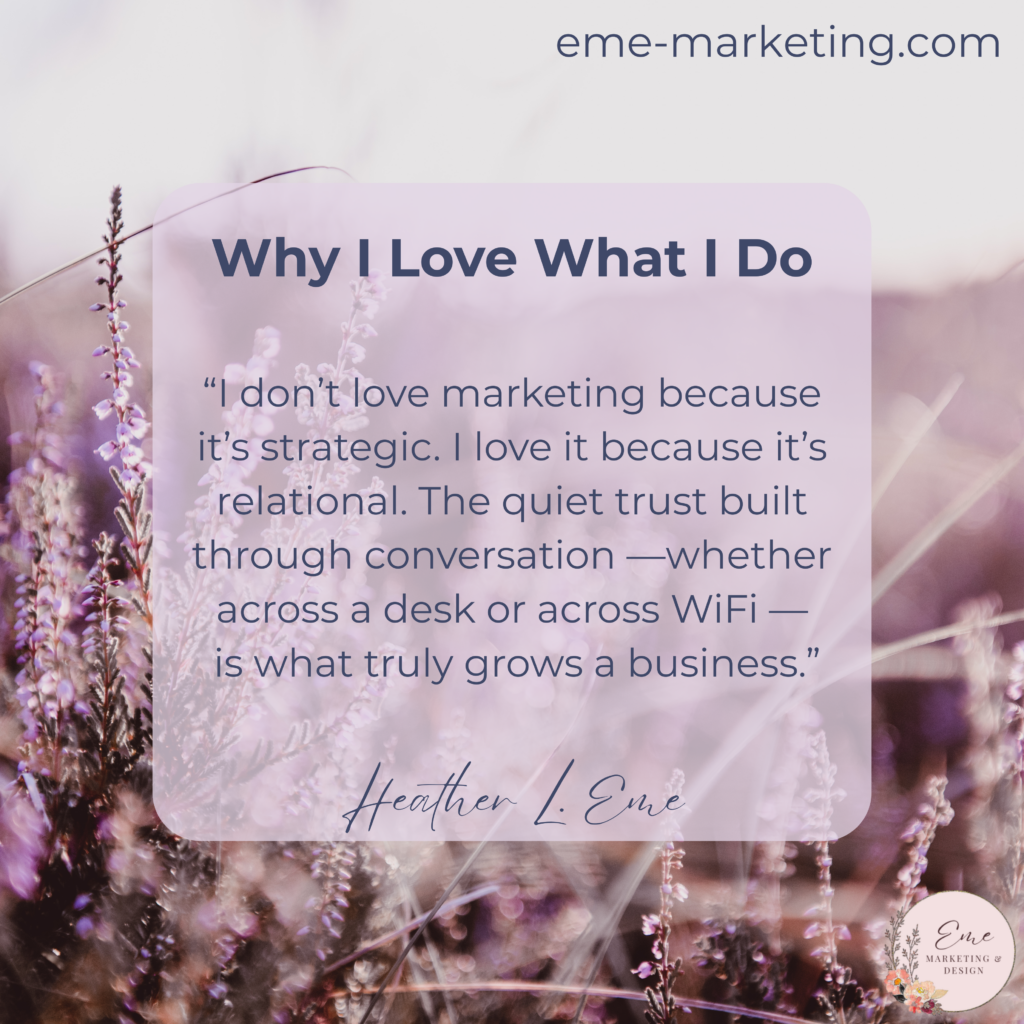
- The Kind of Marketing That Feels AuthenticI don’t love marketing because of platforms, reach or analytics dashboards. I love it because of the conversations. The quiet strategy calls. The “can I run this by you?” messages. The trust that builds slowly over time. One of the greatest lessons I’ve learned is that online relationships are not less meaningful than in-person ones. They’re simply happening in a different room. When marketing is rooted in guidance, presence and real conversation, it becomes more than strategy. It becomes relationship. And relationships — not trends — are what truly grow sustainable businesses.
- Why Repurposing Content Is One of the Smartest Social Media StrategiesCreating new social media content every day can feel overwhelming for many entrepreneurs, but effective marketing does not always require starting from scratch. Repurposing content allows businesses to take one idea and adapt it into multiple formats across platforms like Instagram, Facebook, LinkedIn and Pinterest. A blog post can become several graphics, a carousel post, a discussion question or a short video clip. By reshaping existing content for different audiences and formats, entrepreneurs can extend the life of their ideas, maintain consistent visibility and reduce the pressure of constantly creating something new.
- Successful Businesses Treat Online Comments Like GoldMost entrepreneurs focus heavily on creating social media posts but overlook one of the most powerful marketing tools available: the comment section. Every comment signals engagement to the algorithm, extends the life of your content and opens the door for real conversation with your audience. When business owners actively participate in those conversations, they build trust, visibility and stronger relationships over time. Instead of treating comments as an afterthought, smart marketers use them strategically to grow their reach and connect with potential clients. Sometimes the most effective social media strategy isn’t posting more content at all. It’s simply showing up and participating in the conversations already happening.
- Relationships Are the Real WorkI didn’t fall in love with marketing because of platforms or analytics. I fell in love with the conversations. The voice notes. The “can I run this by you?” messages. The quiet trust built over time. One of the biggest lessons I’ve learned is that online relationships are not less meaningful than in-person ones. They’re simply happening in a different room. When marketing is rooted in guidance, listening, and genuine care, it becomes something deeper than strategy. It becomes relationship. And relationships — whether across a desk or across WiFi — are what truly build sustainable, meaningful businesses.
- Marketing Is Not a MoodMarketing is not a mood, and building your online visibility around inspiration alone will always create inconsistency. In this first installment of The Organized Creative, Heather Eme shares the exact marketing system she is currently running in her business, including weekly content focus, defined platform roles, intentional engagement and CEO review practices. Designed for brilliant but overwhelmed female entrepreneurs, this piece explores how structure reduces decision fatigue, creates sustainable visibility and turns scattered effort into strategic growth. If your marketing feels chaotic or reactive, the issue isn’t effort. It’s infrastructure — and infrastructure can be built.
- How To Grow Your Blog When Beginner Blog Marketing Stops WorkingBeginner blog marketing often focuses on publishing content and sharing it on social media, but sustainable growth requires a more strategic approach. In this article, Heather Eme explores the shift from beginner to intermediate blog marketing and explains how entrepreneurs can turn their blogs into powerful marketing engines. Through the story of Erin Emerson, a creative writer learning to structure her marketing, readers discover how search intent, content repurposing, email marketing, analytics and user experience all work together to grow visibility. If your blog feels like it isn’t producing the results you hoped for, this guide explains how structure and systems can transform your content into a long-term marketing asset.
- Why Your Blog Is Still Relevant NowMany entrepreneurs wonder whether blogging is still relevant in today’s social media-driven marketing world. While platforms and content formats continue to evolve, blogs remain one of the most powerful tools for building long-term visibility and trust online. In this post from the Virtual Coffee Conversations with Clients series, Heather Eme shares a conversation about why blogs still matter for small businesses. The article explains how blog posts support search engine discovery, provide valuable information to potential clients, and create lasting content that continues working for a business long after it is published.