
Estimated reading time: 6 minutes
Key Takeaways
- Hashtags are essential for enhancing visibility and engagement on social media; they help categorize content and connect communities.
- There are various types of hashtags including branded, trending, industry-specific, and location-based hashtags, each serving distinct purposes.
- Effective hashtag usage requires strategic planning, including research on relevant hashtags and creating a cohesive hashtag strategy.
- Following best practices like keeping hashtags relevant, limiting their number, and engaging with hashtag communities enhances performance.
- Measuring success through metrics, testing different hashtag sets, and refining your strategy based on analytics are crucial for mastering the Art of Hashtags.

Table of contents
In the digital era, where social media reigns supreme, hashtags have become integral to our online vocabulary. Hashtags serve as navigational tools, guiding users to discover and engage with content that aligns with their interests. For businesses, influencers, and individuals alike, mastering the art of hashtags is crucial for enhancing visibility, expanding reach, and driving engagement.
Understanding the Power of Hashtags
At its core, a hashtag is a word or phrase preceded by the ‘#’ symbol. It categorizes content and makes it discoverable to a wider audience. Originally popularized on Twitter in 2007 by Chris Messina, hashtags have since evolved into a universal language of social media communication.
The Role of Hashtags in Social Media
Hashtags play several essential roles in social media:
- Content Categorization: Hashtags organize content around specific topics, allowing users to find and engage with posts related to their interests.
- Enhanced Discoverability: By using relevant hashtags, content creators increase the likelihood of their posts being discovered by users who are searching for or following those hashtags.
- Community Building: Hashtags foster communities of like-minded individuals, enabling users to connect and engage with others who share similar interests or passions.
- Campaign Tracking: Businesses and marketers use branded hashtags to track the performance of marketing campaigns and measure their impact across social media platforms.
Types of Hashtags
Hashtags come in various forms, each serving a distinct purpose:
- Branded Hashtags: Unique to a specific brand or campaign, branded hashtags help businesses cultivate brand identity, foster community engagement, and track the success of marketing initiatives.
- Trending Hashtags: These are hashtags that are currently popular and widely used across social media platforms. Leveraging trending hashtags can amplify reach and engagement, as they are often associated with timely events, holidays, or viral trends.
- Industry-specific Hashtags: Tailored to a particular industry or niche, these hashtags enable content creators to target a specific audience interested in a particular topic or subject matter.
- Location-based Hashtags: These hashtags are geographically targeted and are used to connect with users in specific locations or regions.
Strategies for Effective Hashtag Usage
While hashtags offer immense potential for increasing visibility and engagement, their effectiveness depends on how strategically they are utilized. Here are some key strategies for mastering the art of hashtags:
Research and Analysis
Before incorporating hashtags into your social media strategy, it’s essential to conduct thorough research and analysis to identify the most relevant and effective hashtags for your content. Here’s how:
- Identify Your Target Audience: Understand your target audience’s interests, preferences, and online behavior to determine which hashtags resonate with them.
- Competitor Analysis: Analyze the hashtags used by your competitors or industry peers to gain insights into popular trends and topics within your niche.
- Keyword Research: Use tools like Later, Semrush, Hootsuite or social media analytics platforms to discover trending hashtags related to your industry or niche keywords.
Create a Hashtag Strategy
Once you’ve conducted research and identified relevant hashtags, it’s time to develop a cohesive hashtag strategy tailored to your goals and objectives:
- Mix Broad and Specific Hashtags: Strike a balance between broad, high-volume hashtags and more specific, niche hashtags. Broad hashtags increase visibility to a wider audience, while specific hashtags target users with a more profound interest in your content.
- Use Branded Hashtags: Create unique hashtags that reflect your brand identity and resonate with your audience. Encourage followers to use branded hashtags when sharing user-generated content or participating in contests and campaigns.
- Incorporate Trending Hashtags: Monitor trending hashtags and capitalize on relevant ones to join timely conversations and increase exposure for your content. However, ensure that your trending hashtags are authentic and aligned with your brand values.
- Test and Iterate: Continuously monitor the performance of your hashtags and analyze engagement metrics to refine your hashtag strategy over time. Experiment with different combinations of hashtags and evaluate their impact on reach, engagement, and follower growth.
Hashtag Best Practices
In addition to strategic planning, adhering to best practices can enhance the effectiveness of your hashtag usage:
- Keep It Relevant: Use hashtags that are directly related to your post’s content. Irrelevant or excessive hashtags can come across as spammy and may deter users from engaging with your content.
- Limit Hashtags: While platforms like Instagram allow up to 30 hashtags per post, it’s best to exercise restraint and focus on quality over quantity. Aim for a mix of 5-10 relevant hashtags per post to maintain readability and authenticity.
- Customize Hashtags for Each Platform: Tailor your hashtag strategy to each social media platform’s specific requirements and conventions. While Instagram favors hashtags in the caption or first comment, Twitter integrates hashtags seamlessly into the body of tweets.
- Engage with Hashtag Communities: Don’t just use hashtags as a broadcasting tool; actively engage with the surrounding communities and conversations. Like, comment, and share posts from other users using the same hashtags to foster relationships and expand your network.
Measuring Success and Iterating
The final step in using hashtags effectively is measuring results and making improvements based on what the data shows.
Track performance metrics. Use built-in platform analytics or third-party tools to see how your hashtags perform. Pay attention to reach, impressions, engagement, and follower growth.
Test different hashtag sets. Try A/B testing by using different hashtags on similar posts. Compare results to see which combinations perform best. Test the number of hashtags, how specific they are, and how relevant they are to the content.
Refine your strategy. Review your analytics and remove hashtags that are not working. Use more of the hashtags that drive engagement. Look for new trends or opportunities to test.
Stay up to date. Social media platforms change often. Trends and algorithms evolve quickly. Keep an eye on platform updates and industry news so your hashtag strategy stays effective.
Final Thoughts
In the ever-expanding universe of social media, hashtags are the guiding stars illuminating our content’s path to visibility and engagement. By mastering the art of hashtags and incorporating them strategically into your social media strategy, you can unlock new avenues for reaching and connecting with your target audience. From research and planning to execution and analysis, effective hashtag usage requires creativity, data-driven decision-making and adaptability. By embracing hashtags as powerful tools for discovery and community building, you can elevate your online presence, amplify your message, and drive meaningful interactions with your audience.
Need help with your hashtag strategy?
Check Out These Additional Resources
- How to Use Hashtags Effectively on Every Social Media Platform in 2026
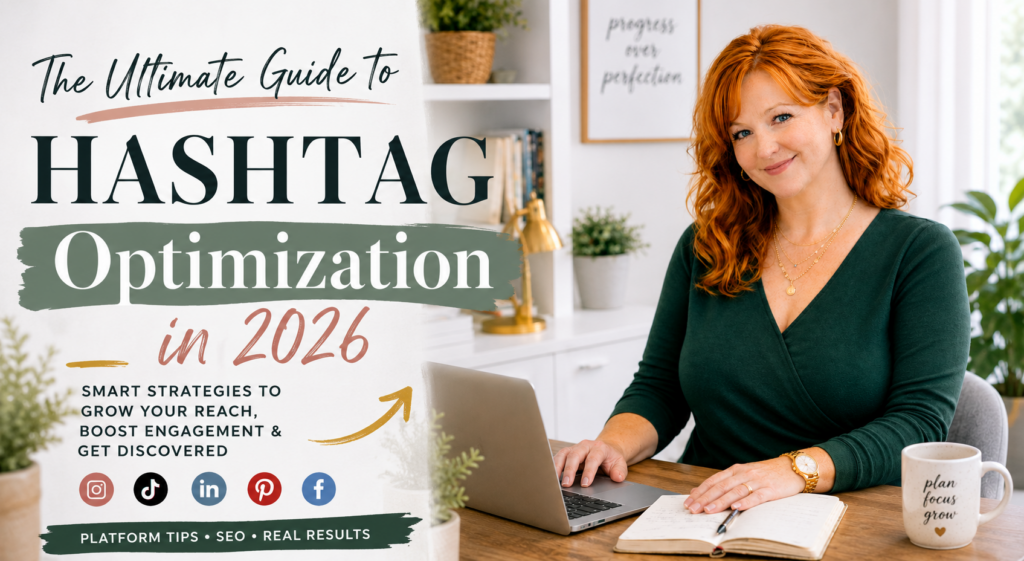
 Hashtags are no longer about stuffing captions with trending phrases and hoping for viral reach. In 2026, hashtags work best when they support searchability, audience targeting, and content relevance across platforms like Instagram, Threads, TikTok, LinkedIn, Pinterest, and Facebook. Each platform now uses hashtags differently, which means businesses need smarter, more intentional strategies. This blog breaks down how hashtags actually function today, what mistakes to avoid, and how to optimize your hashtag strategy for discoverability, engagement, SEO, and long-term growth. If your current hashtag strategy still feels stuck in 2020, this guide will help you modernize your approach and get better results.
 - The Quiet Work No One SeesGrowth rarely begins with applause. It begins quietly. Before the visible results, there is alignment. Before the momentum, there is refinement. Much of meaningful business development happens behind the scenes through clarified messaging, simplified strategy, and steady repetition. Although those stages are not flashy, they are foundational. Sustainable growth is built in quieter seasons long before numbers rise publicly. Helping entrepreneurs stay grounded during that phase — when doubt is loud and progress feels invisible — is one of the most meaningful parts of my work. Because durable success is rarely dramatic at first. It is disciplined, aligned, and steady.
- Why Your Marketing Feels Inconsistent (and How to Fix It Without Burning Out)If your marketing feels inconsistent, scattered or dependent on your energy level each week, you are not alone. Many creative female entrepreneurs are not struggling because they lack ideas. They are struggling because they lack a repeatable system to support their visibility. In this daily marketing tip, learn why inconsistent marketing happens, how it affects trust and momentum, what to do to fix it and what to avoid if you want to stay visible without burning out. If your content rhythm feels chaotic lately, this blog will help you build a strategy that feels more organized, sustainable and supportive.
- Why Your Content Isn’t Converting (and What to Fix First)If your content looks good but isn’t bringing in inquiries, leads or real business growth, there’s a disconnect somewhere in your strategy. This daily marketing tip breaks down why your content may not be converting and what to fix first. Designed for creative female entrepreneurs, you’ll learn how to move from simply posting to creating content with purpose, clarity and direction. From identifying common mistakes to implementing practical changes, this guide helps you turn visibility into actual results. If your marketing feels inconsistent or unclear, this is your starting point to create content that finally works for your business.
- How to Build Consistency That Stands The Test of TimeMotivation is unreliable. Some weeks, ideas flow easily and showing up feels natural. Other weeks, energy dips and everything feels heavier. If your marketing strategy depends on constant inspiration, it will always feel fragile. Sustainable consistency isn’t built on emotion. It’s built on structure. When you know what you talk about, who you serve and where you’re showing up, momentum becomes manageable instead of overwhelming. You don’t need more pressure. You need a system that works on your normal days. Because businesses don’t grow from adrenaline. They grow from steady, intentional visibility.
- How to Use Mailchimp in 2026 to Build an Email Marketing System That Grows Your BusinessEmail marketing isn’t outdated in 2026. It’s one of the few tools you actually own. Mailchimp helps you turn scattered marketing into a system that works consistently behind the scenes. From simple sign-up forms to automated welcome sequences and smart segmentation, it allows you to build real connections without feeling overwhelmed. This blog walks through how to use Mailchimp in a practical, sustainable way, using Erin Emerson as a real-world example. If your marketing feels inconsistent or exhausting, this approach helps you create something steady, intentional, and built for long-term growth instead of short-term visibility.
- Your Audience Doesn’t Owe You EngagementEngagement on social media is not something your audience owes you. It is something that grows through relevance, familiarity and trust. When posts underperform, it can feel personal, especially for small business owners who invest time and vulnerability into their content. Shifting from expectation to intention changes the experience. Instead of focusing on what should perform, focus on what serves. People engage when they feel understood and when your message aligns with what they are already navigating. Connection strengthens when it is invited rather than demanded. Sustainable marketing depends less on urgency and more on understanding your audience consistently.
- The Kind of Marketing That Feels AuthenticI don’t love marketing because of platforms, reach or analytics dashboards. I love it because of the conversations. The quiet strategy calls. The “can I run this by you?” messages. The trust that builds slowly over time. One of the greatest lessons I’ve learned is that online relationships are not less meaningful than in-person ones. They’re simply happening in a different room. When marketing is rooted in guidance, presence and real conversation, it becomes more than strategy. It becomes relationship. And relationships — not trends — are what truly grow sustainable businesses.
- Why Repurposing Content Is One of the Smartest Social Media StrategiesCreating new social media content every day can feel overwhelming for many entrepreneurs, but effective marketing does not always require starting from scratch. Repurposing content allows businesses to take one idea and adapt it into multiple formats across platforms like Instagram, Facebook, LinkedIn and Pinterest. A blog post can become several graphics, a carousel post, a discussion question or a short video clip. By reshaping existing content for different audiences and formats, entrepreneurs can extend the life of their ideas, maintain consistent visibility and reduce the pressure of constantly creating something new.
- Successful Businesses Treat Online Comments Like GoldMost entrepreneurs focus heavily on creating social media posts but overlook one of the most powerful marketing tools available: the comment section. Every comment signals engagement to the algorithm, extends the life of your content and opens the door for real conversation with your audience. When business owners actively participate in those conversations, they build trust, visibility and stronger relationships over time. Instead of treating comments as an afterthought, smart marketers use them strategically to grow their reach and connect with potential clients. Sometimes the most effective social media strategy isn’t posting more content at all. It’s simply showing up and participating in the conversations already happening.
- Relationships Are the Real WorkI didn’t fall in love with marketing because of platforms or analytics. I fell in love with the conversations. The voice notes. The “can I run this by you?” messages. The quiet trust built over time. One of the biggest lessons I’ve learned is that online relationships are not less meaningful than in-person ones. They’re simply happening in a different room. When marketing is rooted in guidance, listening, and genuine care, it becomes something deeper than strategy. It becomes relationship. And relationships — whether across a desk or across WiFi — are what truly build sustainable, meaningful businesses.
- Marketing Is Not a MoodMarketing is not a mood, and building your online visibility around inspiration alone will always create inconsistency. In this first installment of The Organized Creative, Heather Eme shares the exact marketing system she is currently running in her business, including weekly content focus, defined platform roles, intentional engagement and CEO review practices. Designed for brilliant but overwhelmed female entrepreneurs, this piece explores how structure reduces decision fatigue, creates sustainable visibility and turns scattered effort into strategic growth. If your marketing feels chaotic or reactive, the issue isn’t effort. It’s infrastructure — and infrastructure can be built.