
Estimated reading time: 9 minutes
Key Takeaways
- Google offers powerful marketing tools, including Google Ads, Google Business Profile, and Google Analytics, to help businesses succeed online.
- Google Ads allows targeted advertising through PPC, reaching customers based on specific keywords and demographics.
- Google Business Profile enhances local visibility by providing essential business information and engaging potential customers directly.
- Google Analytics provides insights into website performance, user behavior, and campaign effectiveness to optimize marketing strategies.
- To maximize effectiveness, businesses should strategically use these powerful Google tools while continuously optimizing their approach.
Table of contents
Google stands as an omnipresent force, offering a suite of powerful marketing tools that can propel businesses to new heights of success. From improving search visibility to engaging customers at every step, Google’s marketing tools help businesses navigate the online world with precision and efficiency. At the forefront of these tools is Google Ads, formerly Google AdWords. This platform lets businesses create and show ads across Google’s wide network, reaching people when they search for products or services related to your offerings.
But Google’s marketing prowess extends far beyond paid advertising alone. With Google Business Profile, businesses can establish a prominent online presence, appearing prominently in local search results and Google Maps while providing essential information such as their address, phone number, hours of operation, and customer reviews. Additionally, Google Analytics is a powerful ally in the quest for marketing success, offering comprehensive insights into website traffic, user behavior, and campaign performance. Together, these tools form the bedrock of effective Google marketing strategies, empowering businesses to connect with their audience, drive traffic, and achieve their goals in the ever-evolving digital landscape.
Google Ads

What Is Google Ads?
Ads, formerly AdWords, is one of the most influential and widely used online advertising platforms available to businesses today. It enables advertisers to create and display ads across Google’s vast network, reaching potential customers precisely when searching for products or services related to the advertiser’s offers. Through a pay-per-click (PPC) model, advertisers bid on keywords relevant to their offerings, and their ads appear at the top of Google search results or on other websites within the Google Display Network.
The platform provides advertisers with unparalleled targeting options, allowing them to tailor their ads based on location, demographics, interests, and search intent. With robust analytics tools, advertisers can track the performance of their campaigns in real time, measuring key metrics such as impressions, clicks, conversions, and return on investment (ROI). Ads empower businesses of all sizes to reach their target audience, drive website traffic, and achieve their marketing objectives precisely and efficiently.
How Do I Use It?
Using Ads effectively requires a strategic approach encompassing careful planning, precise targeting, and ongoing optimization. To begin, advertisers start by setting clear objectives for their campaigns, whether it’s driving website traffic, increasing brand awareness, or generating leads and conversions. With objectives in mind, advertisers conduct thorough keyword research to identify relevant search terms and phrases that align with their offerings and audience intent. With these keywords, advertisers create compelling ad copy that resonates with their target audience, leveraging persuasive language and clear calls-to-action to entice clicks and conversions.
Once the ads are crafted, advertisers set up their campaigns within the Google Ads platform, configuring targeting parameters such as location, demographics, interests, and device preferences to reach their desired audience effectively. Advertisers also establish bidding strategies and budgets to control how much they will pay for clicks and allocate their advertising spend efficiently. Throughout the campaign’s lifecycle, ongoing monitoring and optimization are essential. Advertisers analyze performance metrics such as click-through rate (CTR), conversion rate, and return on ad spend (ROAS). They make data-driven adjustments to keyword bids, ad copy, targeting criteria, and budget allocations to maximize campaign effectiveness and achieve their marketing objectives.
Google Business Profile

What is Google Business Profile?
Business Profile, formerly Google My Business, serves as a cornerstone for businesses aiming to establish a solid online presence and connect with potential customers. It’s a free tool provided by Google that allows businesses to manage their online presence across various Google services, including Search and Maps. With a Google Business Profile, businesses can provide essential information to users, such as their address, phone number, hours of operation, and website URL, ensuring they can be easily discovered and contacted by potential customers.
Moreover, Business Profile offers a platform for businesses to showcase their brand and engage with their audience directly. Businesses can add photos and videos to their profile, giving users a glimpse into their products, services, and ambiance. Additionally, users can leave reviews and ratings, providing valuable feedback for businesses while helping other users make informed decisions. By actively managing their Business Profile, businesses can enhance their visibility in local search results, build trust and credibility with potential customers, and drive foot traffic and sales to their physical locations or websites.
How Do I Use It?
Utilizing Business Profile effectively involves strategic steps to optimize visibility, engagement, and conversion. To begin, businesses should claim and verify their profile to gain access to the full suite of features and control over their listing. Once verified, it’s crucial to ensure that all business information, including address, phone number, hours of operation, and website URL is accurate and up-to-date. Providing comprehensive and consistent information improves the user experience and boosts the profile’s visibility in local search results.
Next, businesses should optimize their profile to maximize engagement and appeal to potential customers. This includes adding high-quality photos and videos that showcase the business’s products, services, and ambiance. Encouraging satisfied customers to leave reviews and ratings can also enhance credibility and trustworthiness while responding promptly and professionally to positive and negative reviews demonstrates a commitment to customer satisfaction. Additionally, businesses can leverage features like Google Posts to share updates, promotions, and events directly on their profile, further engaging with their audience and driving traffic to their physical location or website. By actively managing their Google Business Profile and leveraging its full potential, businesses can establish a robust online presence, attract more customers and achieve their marketing goals effectively.
Google Analytics
What Is Google Analytics?
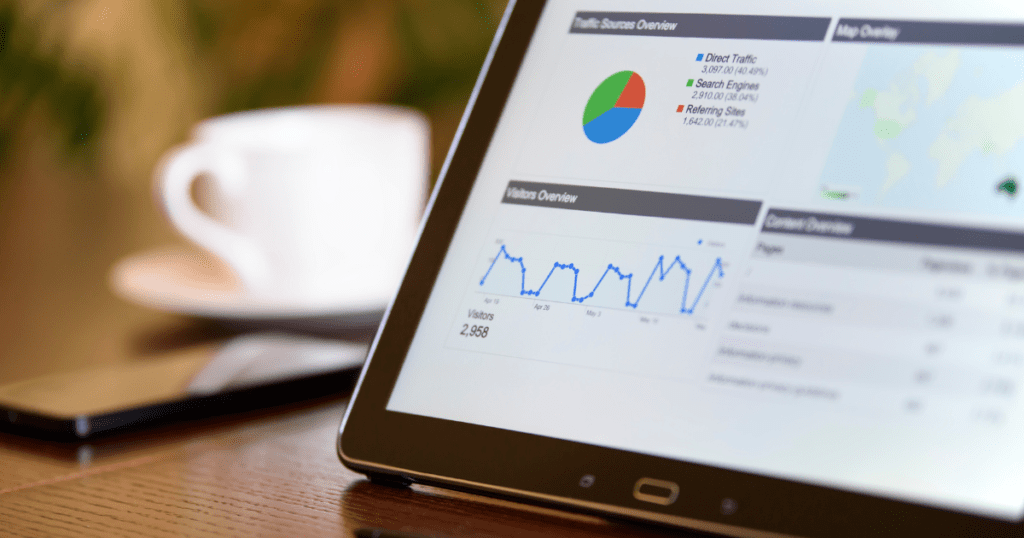
Analytics is a powerful and indispensable tool for businesses seeking to understand and optimize their online presence. At its core, Analytics is a web analytics platform provided by Google, offering comprehensive insights into website traffic, user behavior, and performance metrics. By tracking and analyzing data gathered from website visitors, Analytics empowers businesses to make informed decisions, identify areas for improvement, and maximize the effectiveness of their online marketing efforts.
With Analytics, businesses can gain valuable insights into their website performance, including total website visits, page views, bounce rate and average session duration. The platform also provides in-depth demographic information about website visitors, such as their location, age, gender and interests, allowing businesses to understand their audience better and tailor their marketing strategies accordingly. Moreover, Analytics enables businesses to track specific goals and conversions, such as form submissions, product purchases or newsletter sign-ups. It provides valuable data to measure the effectiveness of their marketing campaigns and optimize their website for maximum engagement and conversion.
How Do I Use It?
Using Analytics effectively involves a strategic approach to extract actionable insights to inform decision-making and optimize website performance. To begin, businesses should ensure that the Analytics tracking code is correctly installed on their website to gather accurate data. Once set up, businesses can navigate through the platform’s intuitive interface to access a wealth of information about their website traffic and user behavior. By exploring reports such as audience demographics, acquisition channels, and behavior flow, businesses can understand who their website visitors are, how they found the site, and how they engage with its content.
With this data, businesses can identify strengths and weaknesses in their website performance and make data-driven decisions to improve user experience and achieve their goals. For example, businesses can analyze which pages have the highest bounce rates or the longest average session durations to pinpoint areas for optimization. By experimenting with different website layouts, content formats, and calls to action, businesses can iteratively refine their website to better align with user preferences and drive conversions. Additionally, businesses can track the effectiveness of their marketing campaigns by setting up goals and tracking conversions, allowing them to allocate resources more efficiently and optimize their marketing strategies for maximum ROI.
The potential for businesses to thrive in the digital realm knows no bounds. From the precision targeting of Google Ads to the local visibility optimization of Google Business Profile and the insightful analytics provided by Google Analytics, these tools offer many opportunities to connect with audiences, drive engagement and achieve marketing objectives. However, success in Google marketing doesn’t come from simply possessing these tools—it stems from a strategic approach, a commitment to continuous improvement, and a relentless pursuit of excellence in delivering value to customers.
Working with Heather Eme | Eme Marketing & Design

There’s a moment in almost every conversation where things shift. You start by telling me what you think you need. More posts. Better engagement. Maybe a little SEO sprinkled in for good measure. And then, somewhere between the “I should be doing more” and the “I don’t even know where to start,” we find the real thing that’s been holding everything together with duct tape and good intentions.
That’s where I come in.
Working with me isn’t about handing you a list of marketing tasks and sending you on your way. It’s about building a system that actually fits the way your brain works, your business runs and your life moves. Because if your marketing only works when you’re overwhelmed, it’s not a strategy. It’s a cycle.
I help you create structure without suffocating your creativity. We turn scattered ideas into repeatable systems. We make your content feel like you again. And we build a marketing foundation that supports growth without demanding burnout as the price of entry.
But more than that, attention is paid to the details that matter. What you’re building toward stays front and center. The quiet shifts in confidence don’t go unnoticed, even before they’re spoken out loud. And the person behind the business is valued just as much as the strategy behind the brand.
If you’ve been craving clarity, consistency and a plan that finally feels doable, this is your invitation.
Let’s grab a cup of coffee and talk through what’s working, what’s not and what your next step actually looks like.
Check Out These Additional Tools
- How to Use Hashtags Effectively on Every Social Media Platform in 2026
 Hashtags are no longer about stuffing captions with trending phrases and hoping for viral reach. In 2026, hashtags work best when they support searchability, audience targeting, and content relevance across platforms like Instagram, Threads, TikTok, LinkedIn, Pinterest, and Facebook. Each platform now uses hashtags differently, which means businesses need smarter, more intentional strategies. This blog breaks down how hashtags actually function today, what mistakes to avoid, and how to optimize your hashtag strategy for discoverability, engagement, SEO, and long-term growth. If your current hashtag strategy still feels stuck in 2020, this guide will help you modernize your approach and get better results.
 - The Quiet Work No One SeesGrowth rarely begins with applause. It begins quietly. Before the visible results, there is alignment. Before the momentum, there is refinement. Much of meaningful business development happens behind the scenes through clarified messaging, simplified strategy, and steady repetition. Although those stages are not flashy, they are foundational. Sustainable growth is built in quieter seasons long before numbers rise publicly. Helping entrepreneurs stay grounded during that phase — when doubt is loud and progress feels invisible — is one of the most meaningful parts of my work. Because durable success is rarely dramatic at first. It is disciplined, aligned, and steady.
- Why Your Marketing Feels Inconsistent (and How to Fix It Without Burning Out)If your marketing feels inconsistent, scattered or dependent on your energy level each week, you are not alone. Many creative female entrepreneurs are not struggling because they lack ideas. They are struggling because they lack a repeatable system to support their visibility. In this daily marketing tip, learn why inconsistent marketing happens, how it affects trust and momentum, what to do to fix it and what to avoid if you want to stay visible without burning out. If your content rhythm feels chaotic lately, this blog will help you build a strategy that feels more organized, sustainable and supportive.
- Why Your Content Isn’t Converting (and What to Fix First)If your content looks good but isn’t bringing in inquiries, leads or real business growth, there’s a disconnect somewhere in your strategy. This daily marketing tip breaks down why your content may not be converting and what to fix first. Designed for creative female entrepreneurs, you’ll learn how to move from simply posting to creating content with purpose, clarity and direction. From identifying common mistakes to implementing practical changes, this guide helps you turn visibility into actual results. If your marketing feels inconsistent or unclear, this is your starting point to create content that finally works for your business.
- How to Build Consistency That Stands The Test of TimeMotivation is unreliable. Some weeks, ideas flow easily and showing up feels natural. Other weeks, energy dips and everything feels heavier. If your marketing strategy depends on constant inspiration, it will always feel fragile. Sustainable consistency isn’t built on emotion. It’s built on structure. When you know what you talk about, who you serve and where you’re showing up, momentum becomes manageable instead of overwhelming. You don’t need more pressure. You need a system that works on your normal days. Because businesses don’t grow from adrenaline. They grow from steady, intentional visibility.